

The U.S. real estate market remains in flux. A dearth of supply has created imbalances, where higher interest rates have failed to arrest residential real estate prices. This is the reverse of the commercial real estate market, which is under stress.
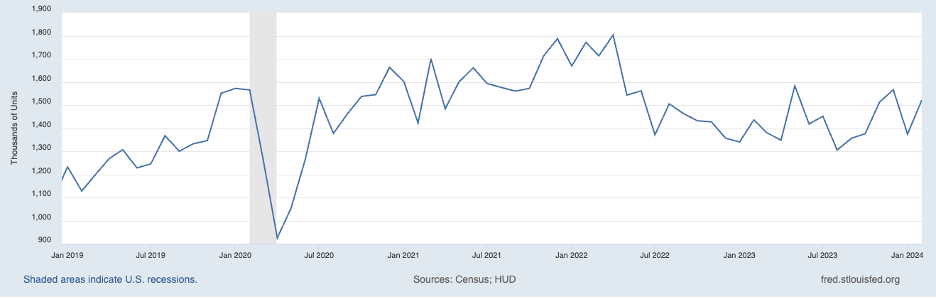
New Home Sales
Home builders have not been eager to bring new inventory to a market tempered by high interest rates. Banks are getting creative, offering new products including 40-year mortgages, and waiving restrictions on refinancing of new loans.
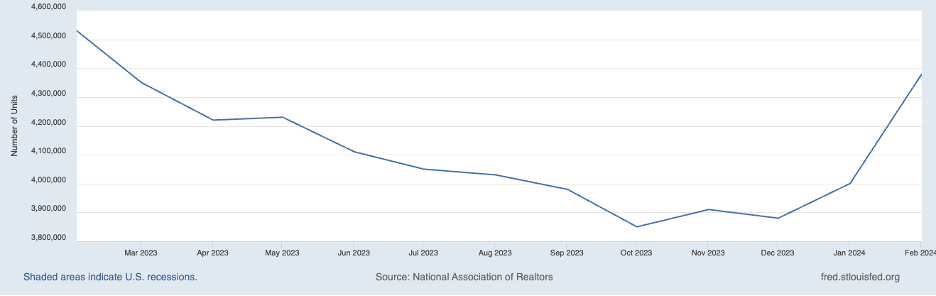
Existing Home Sales
Given the lack of new home inventory, existing home sellers are returning to the market. Initially, a tranche of “rate-lock sellers” who borrowed at the bottom (under 3%) resisted the temptation to sell. But after two years of graduations, career changes, retirements and resettling to new communities, hundreds of thousands of Americans have brought their homes back to the market, and existing home sales are resurging.
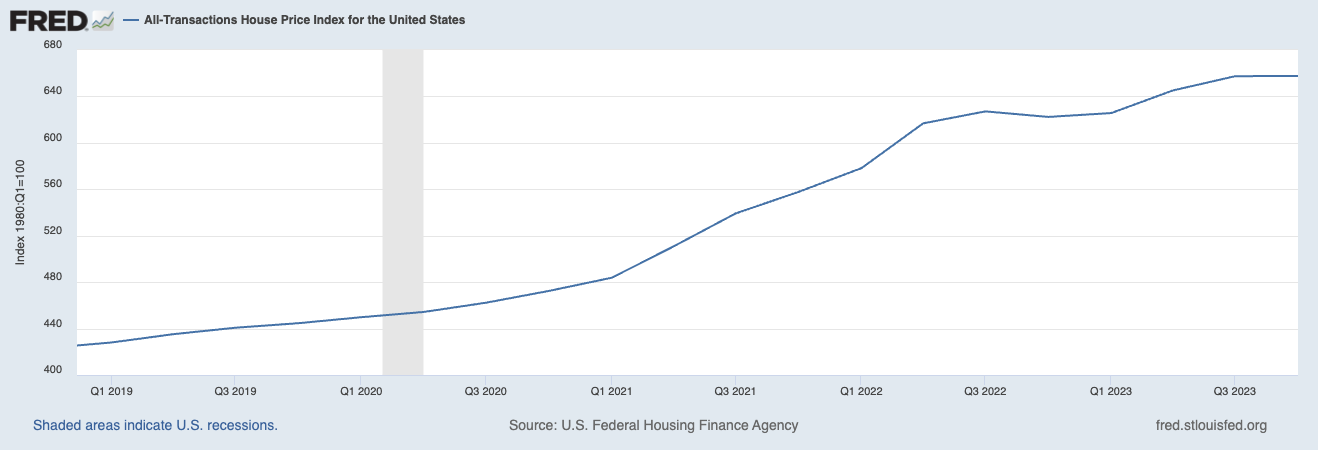
Housing Prices
They very term “housing affordability” remains a misnomer. While there was a modest pullback in some cities during the winter months, housing prices remain high. According to CoreLogic, home prices rose 5.8% between January 2023 and January 2024, even as interest rates spiked. 30-year mortgage rates have settled at around 7% headed into the spring selling season. Meanwhile, the National Association of Realtors’ settlement is reshuffling the deck on how homes are sold.
Multifamily & Commercial: A Horse of a Different Color
Capitalization rates (or cap rates) are confusing for non-real-estate investors. A capitalization rate is merely the amount of net operating income (NOI) divided by the cost of the property. If a multifamily building worth $10 million generated $500k per year in income (without considering any financing costs), it would have a 5% cap rate.
When markets are strong, cap rates go down. Conversely, when markets are weakened like they are now, cap rates spike. Multifamily properties with lower vacancy rates command higher prices (lower cap rates) than commercial properties. Light industrial is the last bastion of strength in a depressed commercial market.
Cap Rates by Property Types
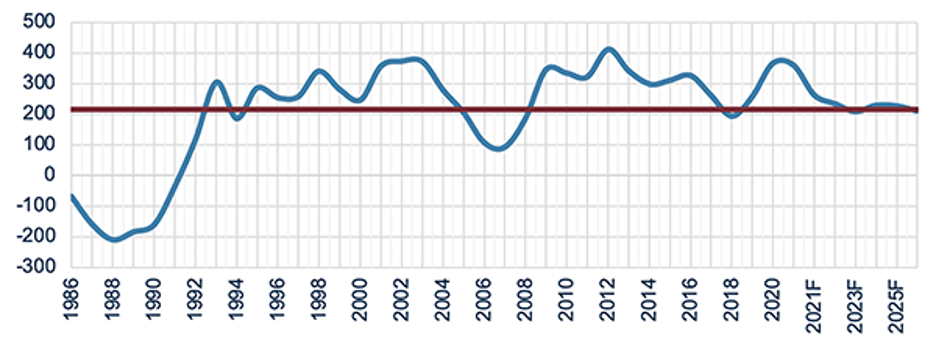
Commercial real estate values (including multifamily) are not only driven by supply and demand of inventory, but by opportunity cost. When yields from treasuries are high like they are today, investors shy away from paying a risk premium for owning real estate. If a property has a 6% cap rate and borrowing costs are 7%, the cash flow is negative—a form of compression common in real estate today. A typical benchmark is the spread between cap rates and the 10-year treasury bills. As interest rates ballooned, so did cap rates.

Source: Conti Capital
Spread Between Multifamily Cap Rate and 10-Year
As a result of these tendencies, capital is flowing away from certain projects, such as large multifamily and mixed-use developments. Construction loan bridge financing is particularly expensive.
Source: Conti Capital
Yield Curve Inversion
It’s inexplicable that the yield curve has remained inverted for so long without a recession. Such yield inversions are a sign that investors are more confident in the short-term than in the long run. This is likely due to the chaos that ensued during the pandemic, and the fear of further damage done by mounting U.S. debt.
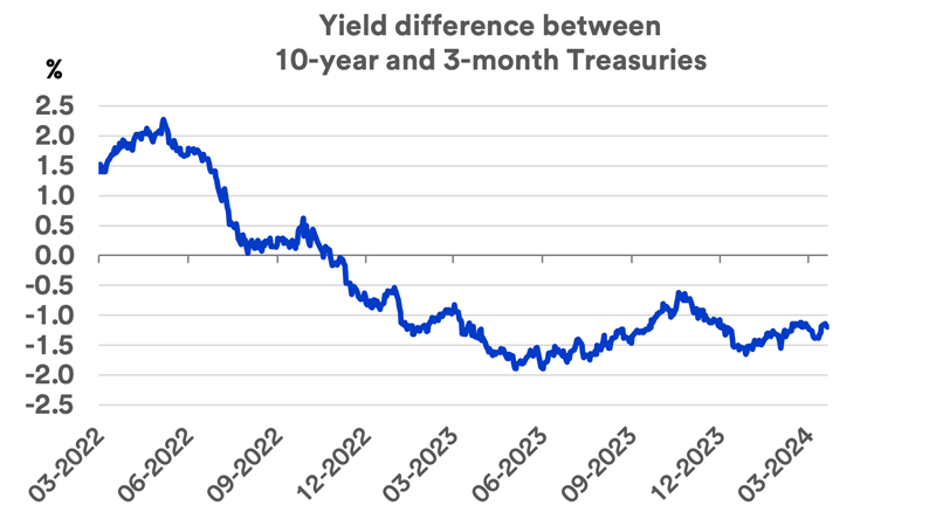
Source: Federal Reserve Bank of St. Louis, March 20, 2024
This yield curve inversion has persisted for 640 days—double the average, and the longest in history. Some wonder whether it’s permanent, but it’s certainly an interesting time to own real estate. Caveat emptor.
Video: Connected Offer
Podcast Recommendation: How Optimism Fuels the Economy

Is the state of the U.S. economy good or bad right now? Stock markets have soared, but consumers remain wary. Are CEOs and investors deluding themselves? Or do Main Street Americans expect too much?
The Strategy Experts

Marc Emmer is President and Chief Strategist & Facilitator at Optimize Inc. He is an author, speaker and consultant recognized as a thought leader throughout North America as an expert in strategic planning.


