

If you’ve been keeping an eye on the Atlanta Federal Reserve’s real-time GDP projections, you might be feeling a bit queasy. The Q1 forecast is dropping like a rock, raising eyebrows about the possibility of an economic downturn. But before we all start panic-buying gold bars and canned beans, let’s remember—one negative month does not a recession make. By definition, a recession requires two consecutive quarters of negative GDP growth.
An intriguing (if counterintuitive) theory floating around is that Trump is actively working to trigger a recession. Naturally, tariffs spark inflation.
But what if that’s his calculus? A slowdown could push the Federal Reserve into aggressive rate cuts, sparking an economic rebound fueled by cheaper borrowing costs instead of the subsidy of government spending. Trump aides have even floated the idea of removing government spending from GDP calculations—effectively rewriting the economic scoreboard.

Trump’s tell during his speech to a joint session of Congress may have been that tariffs would cause “a little disturbance”—indicating his intention to bring pain in hopes that his actions will reset the world order.
While consumer sentiment is falling, fear of future price hikes may be fueling some consumption. Wages are expected to rise 3.7% this year—outpacing inflation. As proven by a surprisingly strong February jobs report, stories of the labor market’s demise are highly exaggerated.
Why, Donald, Why?
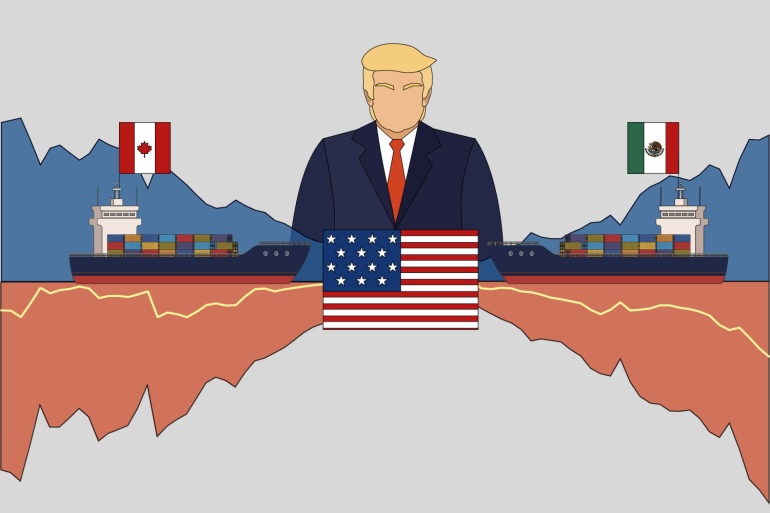
Even the business press seems mystified by the Administration’s shifting tariff policy, explained during a fascinating give-and-take on CNBC with Peter Navarro (one of the President’s senior financial policy advisors). Navarro defended Trump’s policies as if they were not a money grab for the rich, but a way to reset the world economy to serve the U.S. middle class (we are not defending these policies, just trying to make sense of them).
According to Navarro, free trade agreements have prompted abuses, and the U.S. wants to level the playing field. He pointed out that GDP is calculated by adding consumption, private investment, government spending, and net imports. The U.S. would add $1 trillion, or up to 1.5% in GDP growth, if our trade deficit were in balance.
He claimed punitive actions against Mexico and Canada are directly related to fentanyl production and distribution (we really do need to squash those Canadian drug cartels). But many tariffs going into effect in April are reciprocal, based on unfair practices—such as the EU’s 10% tariff on automobiles, compared to a 2.5% U.S. tariff on German and other cars.
He said the first round of tariffs was a “negotiation” and that calls for a pause from U.S. automakers were granted because of their intention to reshore much of the production to the U.S. Navarro pointed out rampant cheating by countries (you know who they are) that engage in child labor, lack environmental controls, manipulate currency, and provide subsidies that drive overcapacity and push prices down. Not to mention the likely theft of U.S. technology, such as in the case of EVs.
Long story short, the Administration is trying to hit the reset button on the world economy to balance the trade deficit and drive GDP growth—at a time when government spending will be curtailed.
Chip, Chip, Coke (No Pepsi)
Semiconductors are the new gold rush. The race to build more chip factories is heating up, with major players like Apple and Nvidia announcing plans for domestic production.
Even before last week’s announcements, the U.S. was experiencing a significant surge in semiconductor manufacturing investments as a result of the CHIPS and Science Act.
Notable new large microchip plant projects in the U.S.:
- Taiwan Semiconductor Manufacturing Company (TSMC): TSMC has announced a $100 billion investment to expand its U.S. operations, including the construction of five new plants in Arizona. This is in addition to the previously committed $65 billion for three factories in the state, bringing the total investment to $165 billion.
- Intel: In January 2022, Intel announced plans for a $20 billion investment to build a new semiconductor manufacturing facility in New Albany, Ohio. The company expects the facility to begin producing chips by 2025.
- Micron Technology: Micron has pledged to invest up to $100 billion over the next 20 years to build a new semiconductor manufacturing campus in Clay, New York.
- GlobalFoundries: In February 2024, GlobalFoundries announced a $1.5 billion investment to build a new fab in Malta, New York, and upgrade its Essex Junction, Vermont, plant.
Chip production will be a boon for new technology hubs in the U.S. States with business-friendly policies and access to skilled labor (think Texas, Arizona, and Ohio) are vying to become the next Silicon Valley for chip production.
With AI demand skyrocketing, this sector could defy economic downturns—provided supply chains hold up and companies can secure the resources they need.
And if you don’t understand the reference in the title, you’ve clearly missed out on a little slice of American lore: The Olympia Restaurant.
Beware, Lawyers—the Accountants Are Coming for You
Big law firms are taking note—the accountants are coming. KPMG recently announced the establishment of a legal arm in the U.S., thanks to a new court ruling that opens the door for accounting firms to offer legal services.
Consistent with our many musings on this page, this is just the latest example of a movement toward vertical integration. Imagine a world where your tax consultant, financial auditor, and corporate attorney are all under the same roof. For businesses, this could mean streamlined services and fewer headaches. For traditional law firms, it’s a major disruption.
As the boundaries between accounting, consulting, and legal services blur, we could see a shake-up in how professional services are delivered.
Book Recommendation: Revenge of the Tipping Point
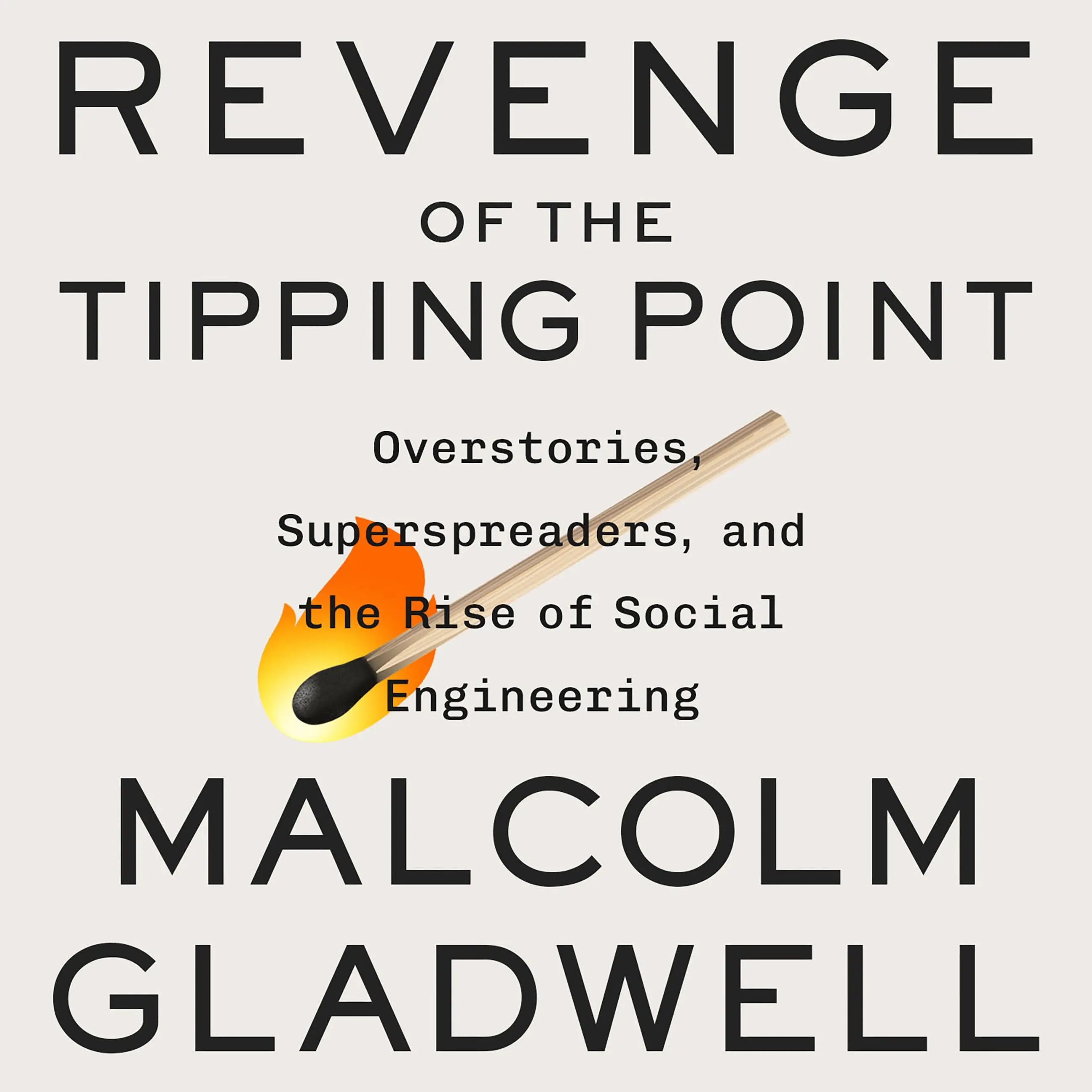
Malcolm Gladwell is back, and his latest book, The Revenge of the Tipping Point, is an instant classic. While his original work explored how small changes spark massive shifts, this sequel examines what happens after the tipping point—when change becomes unstoppable and self-reinforcing.
In today’s volatile economic and technological landscape, this couldn’t be more relevant. Whether it’s AI adoption, geopolitical shifts, or corporate power struggles, we’re living in an era of compounding consequences.
If you’re looking for a thought-provoking read that dissects the mechanics of change, this one belongs on your nightstand.
Podcast Recommendation: Real Housewives of the Oval Office

Jessica Tarlov gets the inside scoop from Anthony Scaramucci—the man who lasted 11 wild days in the Trump White House—on where Trump fumbled in his meeting with Zelensky, what really went down during his short but chaotic tenure, and why Elon Musk’s growing influence in government should have all of us paying attention.
The Strategy Experts

Marc Emmer is President and Chief Strategist & Facilitator at Optimize Inc.
He is an author, speaker and consultant recognized as a thought leader throughout North America as an expert in strategic planning.


