

The Middle East is maturing into a credible bloc with long-term leverage—well beyond OPEC. No longer content to be the source of oil, countries like Saudi Arabia and Qatar are asserting influence across technology, diplomacy, and sport.
Donald Trump’s recent visit to Riyadh underscored a dramatic turn in the new world order. Once seen as merely transactional, U.S.-Saudi relations are now steeped in deeper strategic alignment. The visit came with a surprising undercurrent: hope for a ceasefire in Gaza, with Mohammed bin Salman positioning himself as a would-be mediator between warring factions. It’s a stark departure from the days when Saudi leaders were associated primarily with repression and subversion of the United States.
Meanwhile, Saudi Arabia’s rise isn’t limited to diplomacy. The kingdom has invested heavily in global sports—from golf and Formula 1 to football clubs—signaling its ambitions on the global stage. Not to be outdone, Qatar facilitated the largest U.S. aviation purchase in history: 210 Boeing aircraft.
These are not fringe-state moves. It’s important to distinguish between oil-rich states such as the UAE, which seek to preserve the status quo through peace, and others who leverage destabilizing activities in their attempt to reshuffle the deck. Much like the West, poorer countries will require more support from their neighbors. Perhaps most importantly, we hope the more progressive countries compel bad actors in the region to cease state-sponsored terrorism.
The Energy Reckoning
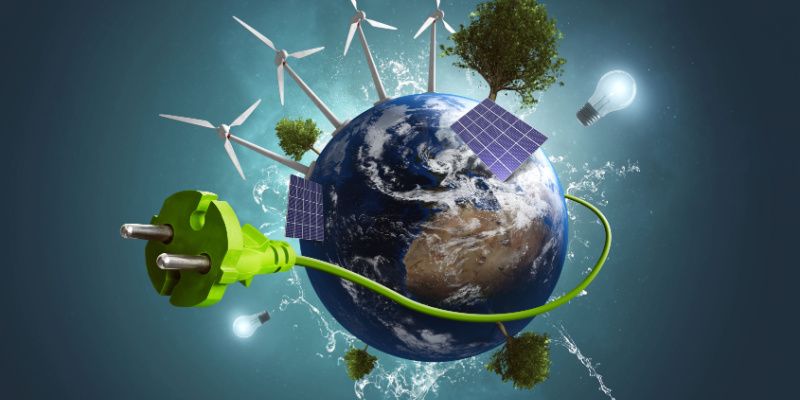
While we’re consumed by short-term news items from air traffic concerns to an economic malaise, we may be taking our eye off the ball. What’s clearly emerging is an existential shortage of energy, and a race to control it.
The global energy equation is shifting—and fast. Artificial intelligence is turning into an energy drain of unprecedented scale. Training large models and powering hyperscale data centers consumes vast amounts of electricity, with some analysts forecasting AI could demand up to 20% of global energy by 2050. And yet, just as our consumption grows exponentially, our ability to deliver power is being undermined by political polarization.
In the U.S., federal support for renewable energy is under siege. The Inflation Reduction Act, which earmarked hundreds of billions for clean energy projects, is now in the crosshairs. Current proposals include slashing Department of Energy funding, including transmission modernization and loan guarantees for green infrastructure.
Compounding the issue: our electric grid is outdated and overstretched. More than 70% of U.S. transmission lines are over 25 years old. Meanwhile, permit delays and underfunded upgrades have stalled critical interconnection projects.
If we want a future powered by AI and decarbonized energy, we must invest not just in generation—but in the grid that connects it all. Otherwise, our ailing infrastructure cannot keep pace with energy demand. What to do about it?
Here are steps private companies can take to stem the tide:
- Install solar panels – Reduce reliance on the grid and lock in long-term savings through tax credits and net metering.
- Use smart thermostats and lighting – Automate energy use to align with business hours and reduce waste.
- Schedule energy-intensive operations off-peak – Shift tasks like manufacturing or HVAC cycling to lower-cost, off-peak times (if using time-of-use billing).
- Switch to LED lighting – Dramatically lower electricity usage with quick ROI.
- Negotiate with energy providers – In deregulated markets, shop for better rates or consider fixed-rate contracts to avoid price spikes.
- Use battery storage – Store power during off-peak or solar-rich hours and use it when prices are high.
- Track usage with software or smart meters – Gain real-time insights to monitor, forecast, and optimize consumption.
- Participate in demand response programs – Earn incentives for reducing load during peak demand periods.
Meanwhile, in the Bond Market
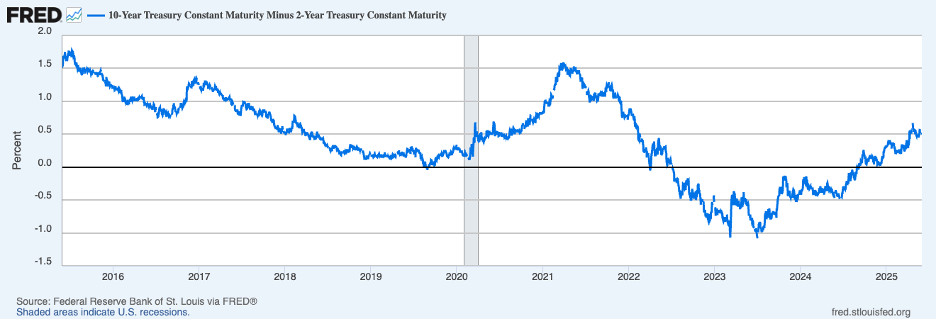
As of mid-2025, the bond market is experiencing notable turbulence. The 10-year U.S. Treasury yield has surged to approximately 4.5%, while the 30-year yield approaches 5%—levels not seen since 2008. This rise is attributed to escalating federal deficits and concerns over inflation, particularly in light of recent fiscal policies. The yield curve remains inverted, with the 2-year yield (as of this writing) at 3.89% and the 10-year at 4.41%, a pattern often considered a precursor to economic downturns. In contrast, equities have shown resilience; the S&P 500 has climbed, buoyed by strong performances in sectors like technology. However, the narrowing spread between bond yields and equity earnings yields raises questions about the sustainability of current stock valuations.
New Optimize Clients
In 2025, Optimize added a number of notable clients:
Advisor Resource Council – Located in Dallas, Texas, Advisor Resource Council is an independent registered investment advisor platform that empowers financial advisors with resources for business growth, compliance, and client service.
Argus Consulting – Based in Overland Park, Kansas, Argus Consulting is a specialized engineering firm providing end-to-end solutions for complex fuel-handling infrastructure across aviation, military, and energy sectors.
JF Brennan – Operating out of La Crosse, Wisconsin, Brennan is a fourth-generation family-owned marine construction firm specializing in environmental remediation, dam construction, commercial diving, harbor management, and submarine cable services.
CemenTech – Headquartered in Indianola, Iowa, Cemen Tech manufactures advanced volumetric concrete mixers that enable on-site, on-demand concrete production, enhancing efficiency and reducing waste.
La Crosse Glass – Situated in La Crosse, Wisconsin, La Crosse Glass and Overhead Door is a family-owned business offering commercial and residential glass, glazing, and overhead door services since 1898.
PPI Global – Based in Pella, Iowa, PPI Global (Precision Pulley & Idler) is an employee-owned company manufacturing high-performance conveyor components, serving industries such as mining, aggregate, and food processing.
Video: How to Use Projects in ChatGPT
The Strategy Experts

Marc Emmer is President and Chief Strategist & Facilitator at Optimize Inc.
He is an author, speaker and consultant recognized as a thought leader throughout North America as an expert in strategic planning.


