
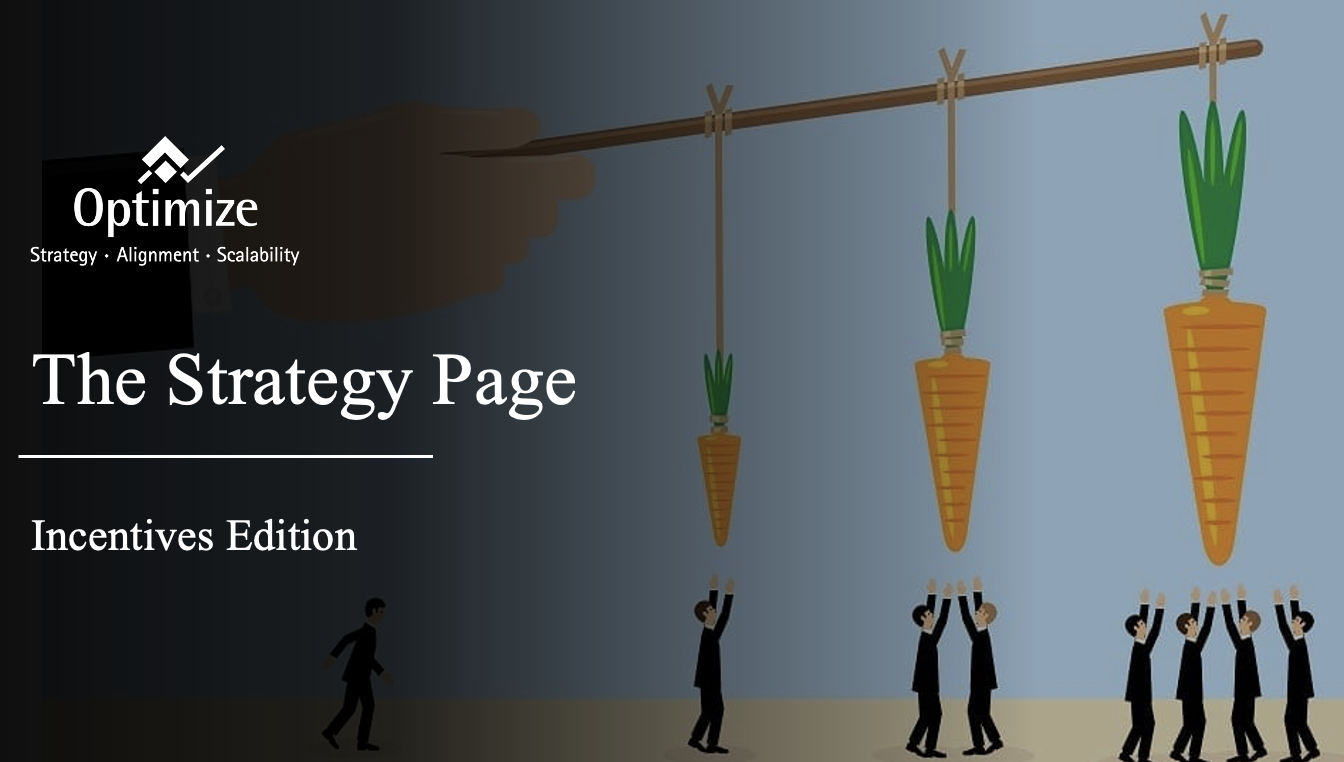
This year’s Emmys featured the expected pomp and circumstance. But the real mic-drop moment wasn’t even an honoree—it came in the form of an incentive.
Host Nate Bargatze stunned the crowd when he announced he would donate $100,000 to the Boys and Girls Club, but each time an honoree rambled over their allotted acceptance speech time, he would deduct from the pot. It was an epic form of public shaming. Many of our most poised public figures were dumbfounded, confirming that accountability isn’t exactly pervasive in Hollywood.
The basis of our economy is incentives: carrots and sticks. When thoughtfully designed, incentives drive our behavior. When poorly designed, they encourage the wrong behavior.
When Incentives Backfire

As Steven Levitt and Stephen Dubner wrote in Freakonomics, “Incentives are the cornerstone of modern life. But they are tricky things. Even if they are transparent, well-meaning, and perfectly designed, they can still backfire.”
Take healthcare. In the U.S., many providers are paid per patient visit. On paper, that sounds fair—compensate doctors for their time. In practice, it creates a damning effect: more appointments, shorter visits, and a system where quantity outruns quality. Patients feel rushed, doctors get burned out, and chronic issues go unaddressed. These are “perverse incentives.”
When Incentives Work
The most effective incentives in the U.S. economy have shaped entire markets. Take the mortgage interest deduction, which for decades encouraged millions of Americans to buy homes, creating stability for families and fueling industries from construction to banking. More recently, electric vehicle tax credits—up to $7,500 per qualifying car—have nudged consumers toward greener choices, accelerating adoption and spurring billions in private investment from automakers. 401(k) employer matching motivates workers to save for retirement, building trillions in household wealth while channeling steady investment into capital markets. These prove that alignment matters.
You may or may not agree with the underlying politics of the incentive, but you can’t ignore their influence as the undercurrent of the U.S. economy.
Designing Incentives for Impact
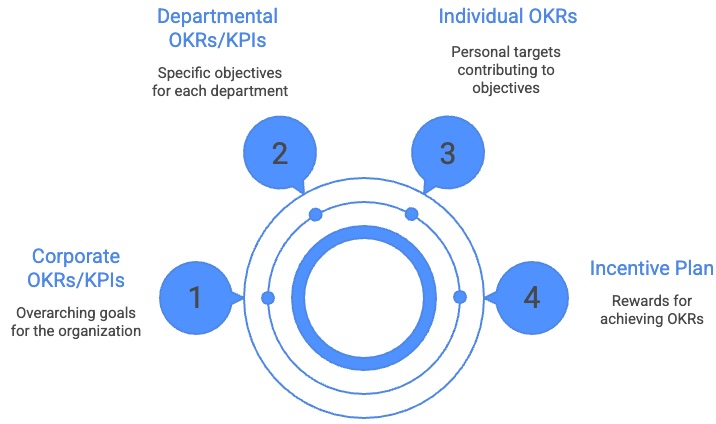
Incentive plans are most effective when they’re a blend of corporate and individual results. Some companies use KPIs for this purpose, and others use an OKR (objectives and key results) framework. KPIs measure performance against existing measures, where OKRs measure things a team wishes to accomplish. KPIs can be blended into OKRs as “key results”.
But regardless of which you use, we recommend utilizing three buckets in your incentive system with a weighting for each. Much like in the broader economy, take steps to ensure your bonus plan is truly an incentive by guarding against two traps, the first being that the company performs but an employee doesn’t. In this case, a company may pay out incentives for poor performance. The reverse is also true—the employee is performing, and the company isn’t, resulting in no bonus despite strong performance. The bucketed system smooths out the edges:
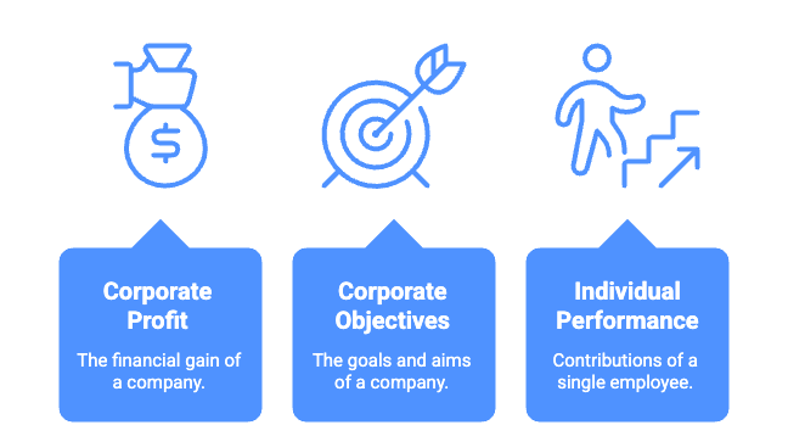
For example, a company may have one bucket for corporate profit (perhaps around 40% of the bonus plan), achievement of corporate objectives (maybe 30%) and individual employee contribution (30%). By smoothing out the edges, the highest probability is that good performers are rewarded for performance, but their incentive is also hedged against company profit.
The company might agree on a proportion of compensation being directed toward the incentive plan, and budget that amount in the beginning of the year. But the long and short of the story is that your plan design matters.
Your Chariot Awaits
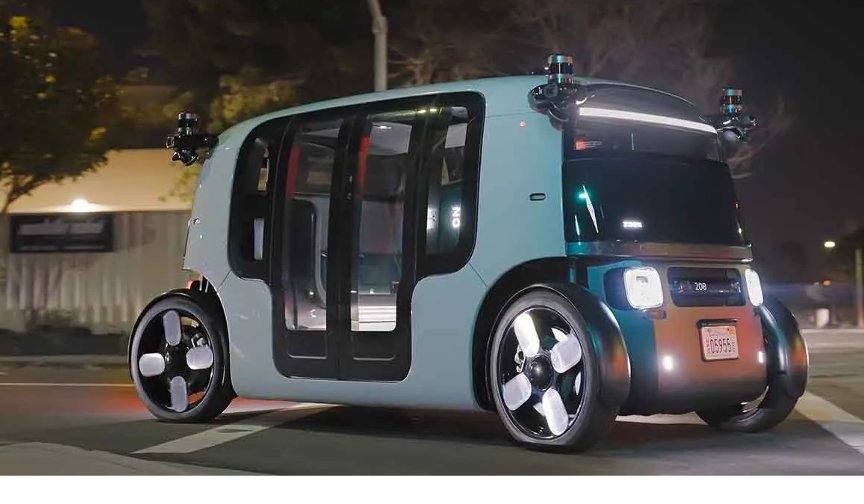
Zoox, Amazon’s autonomous vehicle venture, has entered the market with its custom electric robotaxis. The service debuted with free rides around the Las Vegas strip, using vehicles without steering wheels or pedals. Zoox’s entry marks an escalation in the autonomy race against Tesla and Google’s Waymo. Waymo already operates paid services in several cities, while Tesla is preparing a robotaxi launch for late 2025. With Zoox’s ground-up design and regulatory-first approach, the competition is heating up, making Las Vegas the first real battleground for consumer adoption and industry leadership.
Autonomous vehicles are coming… fast.
Marc’s Minute: Autonomous Vehicle Demo
Nov. 7 Webinar: Business Trends for 2026 and Beyond
Entering 2026, small and midsize businesses are navigating a world of constant change, shaped by rapid advancements in AI, shifting workforce dynamics, global instability, and economic uncertainty.
To help you make informed decisions, we will share our forecast for 2026, covering five key areas from our trends series:
- Economic
- Technology
- Social
- Artificial Intelligence
- Employment
These insights will reveal how you can turn trends in each of these areas into opportunities for growth and gain a lasting competitive edge for your business.
Date: November 7, 2025
Time: 1:00 p.m. ET / 10:00 a.m. PT
Recommended Podcast: The Dividend Cafe
The Strategy Playbook Masterclass
Have you joined our Strategy Masterclass? In this 10-part series, you will learn how to master the art of strategy.
Click below to subscribe for free.


