
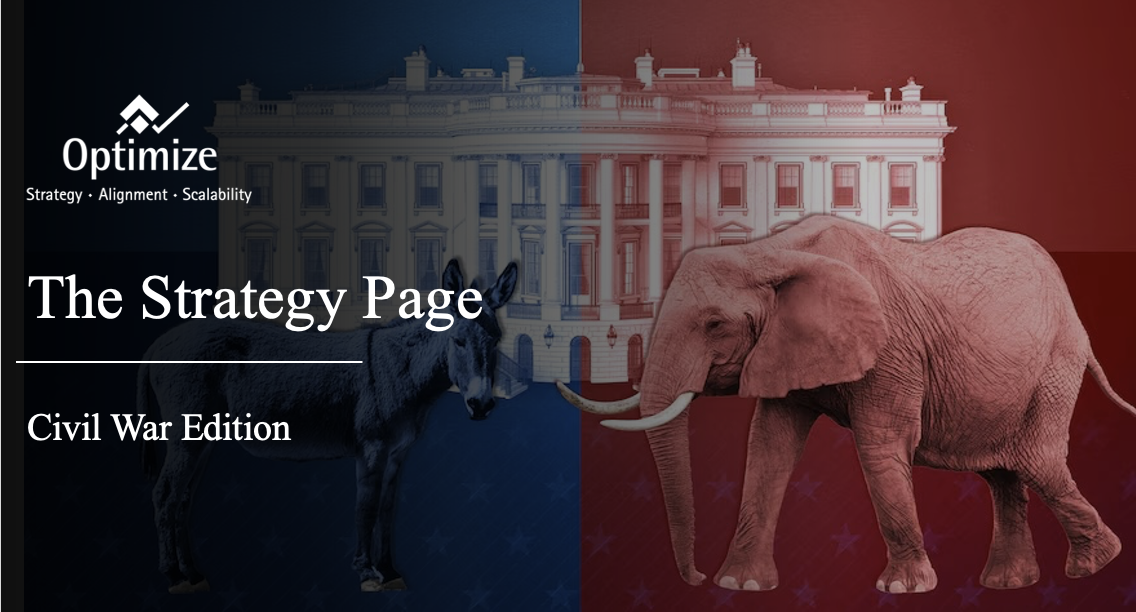
Last week we witnessed the worst of our political system—one side unsympathetic, the other dysfunctional. Congress once again kicked the can down the road, sidestepping any real budget reform. In this edition, we’ll explore the economic fallout of that dysfunction—namely, how political paralysis may lock us into a long period of low interest rates and stagflation. But first, let’s acknowledge the underlying political dynamic.
Washington has devolved into a winner-take-all contest. Democrats are furious that Republicans won’t negotiate on healthcare subsidies tied to the Affordable Care Act—passed with zero GOP votes. SNAP benefits, expanded under the American Rescue Plan Act, passed with little GOP support. Half the country is distressed that 42 million people don’t have enough food to eat, and the other half unhappy that 42 million people qualify for SNAP benefits. Two things can be true at once.
We’re not judging who’s right or wrong, only noting that legislation passed along strict party lines rarely endures the test of time.
Democrats have every reason to decry Trump’s bulldozer approach, but let’s not forget Biden wiped out roughly $400 billion in student-loan debt with a stroke of his pen. Each party, when in power, pushes its agenda unilaterally—until voters push back. That pendulum creates gridlock and bad outcomes for our country.
Economists warn that if we fail to address the national debt, the U.S. could face a fiscal crisis within five years. The IMF recently estimated what it would take to balance the budget: deep spending cuts (politically toxic for Democrats) and a 15 percent tax hike (a non-starter for Republicans).
Our framework draws on Ray Dalio’s When Countries Go Broke—required reading for any business owner. Dalio argues that budget equilibrium (not even debt reduction) would require three moves at once:
- About a 4 percent increase in total taxes
- About a 4 percent reduction in total spending (15 percent of discretionary programs)
- Lower interest rates
All three must happen simultaneously—and during a period of growth, not recession. In a downturn, the Fed cuts rates to near zero, lowering debt costs but leaving fewer policy options. The Fed uses other tools such as quantitative easing that inject liquidity, but also fuel inflation.
For business owners and investors (we do not dispense investment advice) the key takeaway is this: it’s in Washington’s interest to keep rates low. That’s the only viable path out of this hole—but it guarantees a sustained period of high inflation. Higher inflation translates to slower growth, and a devaluation of the U.S. dollar…in other words, “stagflation.”
Ironically, the medicine worsens the disease. Inflation punishes low-income households, and since the top 5 percent already pay 61 percent of federal taxes, any new revenue will come from the wealthy (including many business owners)—discouraging investment and deepening the class war.
So yes, the circumstances are grim. Polarization isn’t going away, and inflation is a reality we’ll all have to learn to live with. It may be (ironically) that AI becomes our savior, if it unlocks enough economic value to stem the tide.
The country is going broke. Let’s hope our politicians figure out how to work together to fix it.
Vistage Webinar: Video Trends for 2026 and Beyond
We’re heading into 2026 amid constant disruption.
AI is reshaping industries. Workforce expectations are shifting fast. And global instability keeps testing leaders daily.
In my latest Vistage webinar, I shared how private companies can turn these forces into opportunity across four fronts:
1. Social & Workforce: Younger employees want purpose and flexibility, not hierarchy. Adapt or lose your best people.
2. Technology: Digital transformation is now the operating system for growth.
3. Artificial Intelligence: AI has moved from experiment to differentiator.
4. Economic: Inflation and volatility aren’t going away. Planning must get faster.
This isn’t about predicting the future; it’s about building foresight into your strategy.
Trend Report: AI Investment
TED: How to Introduce Yourself and Get Hired – Rebecca Okamoto
First impressions matter! A great introduction can be a powerful door opener to new possibilities. However, with today’s split-second attention spans, you may only have seconds to turn your introduction into a business building opportunity.
Podcast: Dairy of a CEO – #1 Simple Way to Never Pay Taxes Again
Most people think the wealthy earn more, but the truth is the ultra-rich play a completely different tax game. Professor Scott Galloway reveals how billionaires legally avoid taxes, the loopholes corporations use to pay almost nothing, and why ordinary people are left carrying the burden.
The Strategy Experts

Marc Emmer is President and Chief Strategist & Facilitator at Optimize Inc. He is an author, speaker and consultant recognized as a thought leader throughout North America as an expert in strategic planning.


