
We often say that to see into the future, we must first understand the past. As the New Year begins, we are not just turning a calendar page—we’re entering the second half of the 2020s and the second quarter of the millennium. The last 25 years have been anything but predictable: Y2K fears, 9/11, a disputed election, two presidential impeachments, a housing collapse, a global pandemic, major military conflicts, massive swings in the economy, and the emergence of artificial intelligence as a force multiplier.
2026 will likely bring more of the same. In the first quarter alone, we may see the effects of tariffs begin to materialize, renewed political pressure on the autonomy of the Federal Reserve, and continued political volatility.
Trump is feeling his oats. The release of Q3 real GDP numbers was shocking—up 4.3%, meaning after including inflation, total nominal growth is over 7%. While inflation is a negative factor for consumers, the resilience of the U.S. economy under these conditions is extraordinary, and suggests next year’s tariff impact may be more muted than expected (many economists expected growth in the 1-2% range in 2026).
Meanwhile, regional unrest continues. In France, Germany, and the United Kingdom, populist movements from the right are reshaping domestic politics. Tensions persist in parts of Southeast Asia, between China and Japan, and across several regions in Africa. The war in Ukraine continues with no clear resolution, and the conflict in Gaza remains a stalemate as Hamas refuses to cede power to an independent authority.
Many of us winced at the seizure of Venezuelan oil tankers and thought, how could this be legal? We have long forgotten the communist regime that nationalized the oil industry there and sized nearly $20 billion in U.S. assets. While taking some oil back may feel to Trump like an opportunity for saber-rattling, Venezuela is merely a pawn in a much bigger chess match.
Trump’s strategy is aimed at extracting wins in Latin America within a broader geopolitical contest, with adversaries such as Russia and Iran. There is a shadow economy of sanctioned oil that Trump is resolute to contain. A secondary effect has been rising energy stress in Cuba, where reliance on Venezuelan oil compounds an already fragile economy. Cuba may be the next flashpoint.
There is no evidence that there will be less chaos in 2026 and beyond, yet our economy is strong. Planning for 2026 requires resilience, scenario thinking, and faster decision-making, not a false sense of security.
2026 Playbook
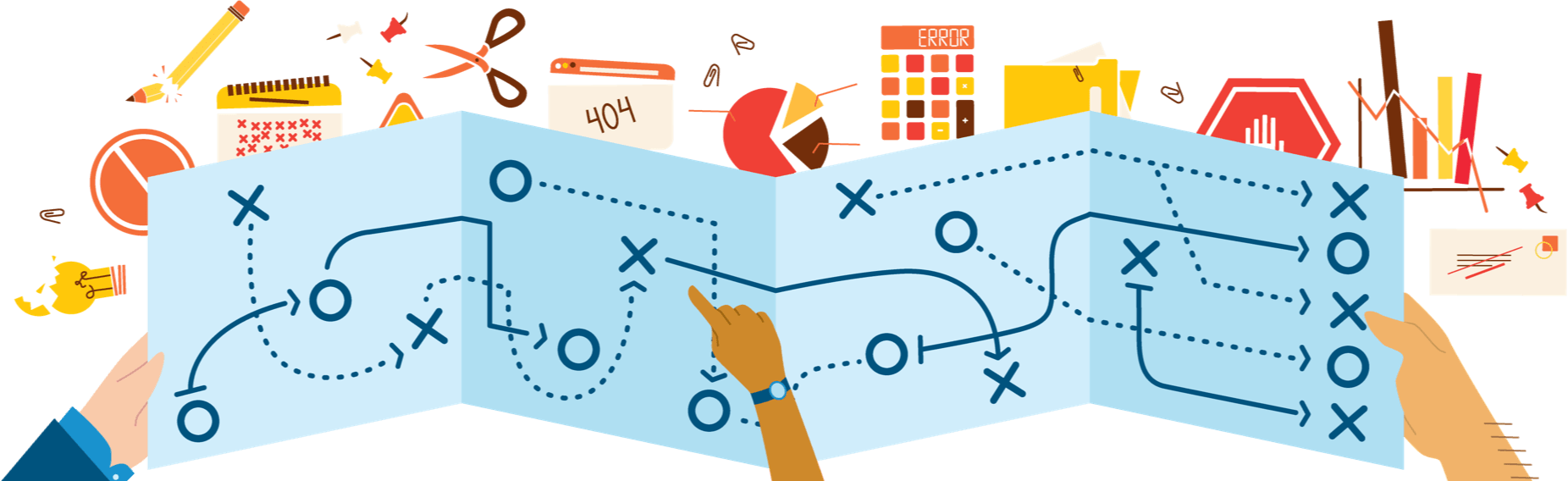
We must not only accept chaos, but find ways to leverage it for competitive advantage and wealth creation. Amid political volatility, inflation shocks, labor dislocation, and technological upheaval, growth and prosperity must be earned.
Having worked with over 225 clients on strategy, our collision with reality has yielded a battle-tested playbook:
Your strategic plan is a working document.
For decades, many organizations relied on static strategies—three- or five-year plans updated annually and largely left untouched. That model is no longer relevant. Competitive threats now emerge overnight, customer demand shifts in real time, and technology compresses decision cycles. Success today requires strategy that is deliberate but flexible.
Contemporary strategy is about relevancy. At its core, strategy is a theory of how you will win. It defines where you will compete, how you will differentiate, and what you believe will change in your market. Just as importantly, it defines what you will not do. In a chaotic marketplace, focus is not optional—it’s essential.
High-level strategy must convert to action.
Management objectives must translate strategy into priorities. Those objectives cascade into execution tools such as OKRs, project plans, and KPIs. When this translation fails, strategy becomes an academic exercise rather than an operating system.
Executing in today’s environment requires two traits that rarely coexist: discipline and agility. Discipline means committing to planning, measurement, and accountability. Agility is willingness to adapt when assumptions prove wrong. High-performing leadership teams understand the difference between persistence and stubbornness.
Competitive analysis must be real-time.
This balance requires continuous evaluation of the competitive environment. Leaders need access to real-time data, not just lagging financial reports. KPIs must reflect both internal performance and external demand indicators—customer behavior, pipeline velocity, pricing pressure, and market momentum.
Management sets the cadence and the tone.
Management practices must reinforce this rhythm. Information sharing should be the default. Leadership teams should meet regularly to reassess assumptions and adapt strategy. Monthly cadence is no longer aggressive—it’s necessary.
Finally, talent matters more than ever. Managers must be comfortable with ambiguity, fluent in technology, and committed to developing people. In an environment defined by chaos, employees don’t want false certainty—they want clarity, trust, and leadership.
The chaos will continue. Our responsibility as leaders is not to eliminate it, but to manage it—and, where possible, take advantage of it. The winners of this decade will not be those who predict the future perfectly, but those who build organizations resilient enough to adapt to chaos.
New Optimize Clients
- Stanford University Sustainability Accelerator — A Stanford-based initiative that funds, mentors, and scales high-impact startups tackling climate change and environmental sustainability through science-driven innovation.
- S&S Builders — A Wyoming-based commercial construction firm known for regional market expertise, and long-standing relationships across energy, industrial, and civic projects.
- Citadel CPM — A California construction project-management firm specializing in complex, high-stakes capital projects for public agencies and institutional owners.
- Star Milling — A California-based multi-generation agricultural manufacturer producing premium animal feeds while navigating commodity volatility, labor constraints, and evolving food-supply economics.
Recommended Podcast –
How I Built This: Advice Line
Tempur-Pedic founder Bobby Trussell joins Guy Raz on the Advice Line to answer questions from three early-stage founders. Plus, Bobby talks about his new book, The Logic That God Exists.
Video – Marc’s Minute: Objectives & Key Results (OKRs)
TED Talk: How to Be Productive Without Burnout
Adam and Cal dig into the data on productivity, debate the benefits and drawbacks of doing fewer things (and spending less time on email and social media), and discuss individual habits and organizational practices for preventing burnout and promoting worthwhile work.
The Strategy Experts

Marc Emmer is President and Chief Strategist & Facilitator at Optimize Inc. He is an author, speaker and consultant recognized as a thought leader throughout North America as an expert in strategic planning.


