
There was a time when the Federal Reserve chair was the adult in the room; above politics, immune to pressure, and singularly focused on price stability. Enter Kevin Warsh.
Warsh, nominated to take the helm in May, is not exactly what markets expected. Once considered a relatively hawkish voice and an institutionalist during his prior stint at the Fed, Warsh will need to change his tune, if he is going to oblige the President on lower rates.
For the last few years, the Fed’s posture has been defined by credibility: painful, persistent tightening in the face of stubborn inflation. Warsh’s nomination shifts the conversation from how long we hold to how quickly we cut.
The bond market is already gaming this out. Prediction markets and Fed Funds futures currently imply multiple rate cuts in 2026, with traders assigning meaningful probability to the first cut by mid-year and as many as three reductions before year-end.
Warsh takes office in May. He inherits an economy still expanding, an electorate fatigued by inflation, and a President impatient for growth.
But interest rates are not the only tool used by the Fed to manipulate the economy. Quantitative easing, or QE, is the Federal Reserve’s unconventional monetary policy tool used when traditional rate cuts are not enough. In simple terms, QE occurs when the Fed creates digital dollars to purchase large quantities of U.S. Treasury bonds and mortgage-backed securities from the open market. By doing so, it pushes bond prices up and yields down, lowers long-term interest rates, and injects liquidity directly into the financial system.
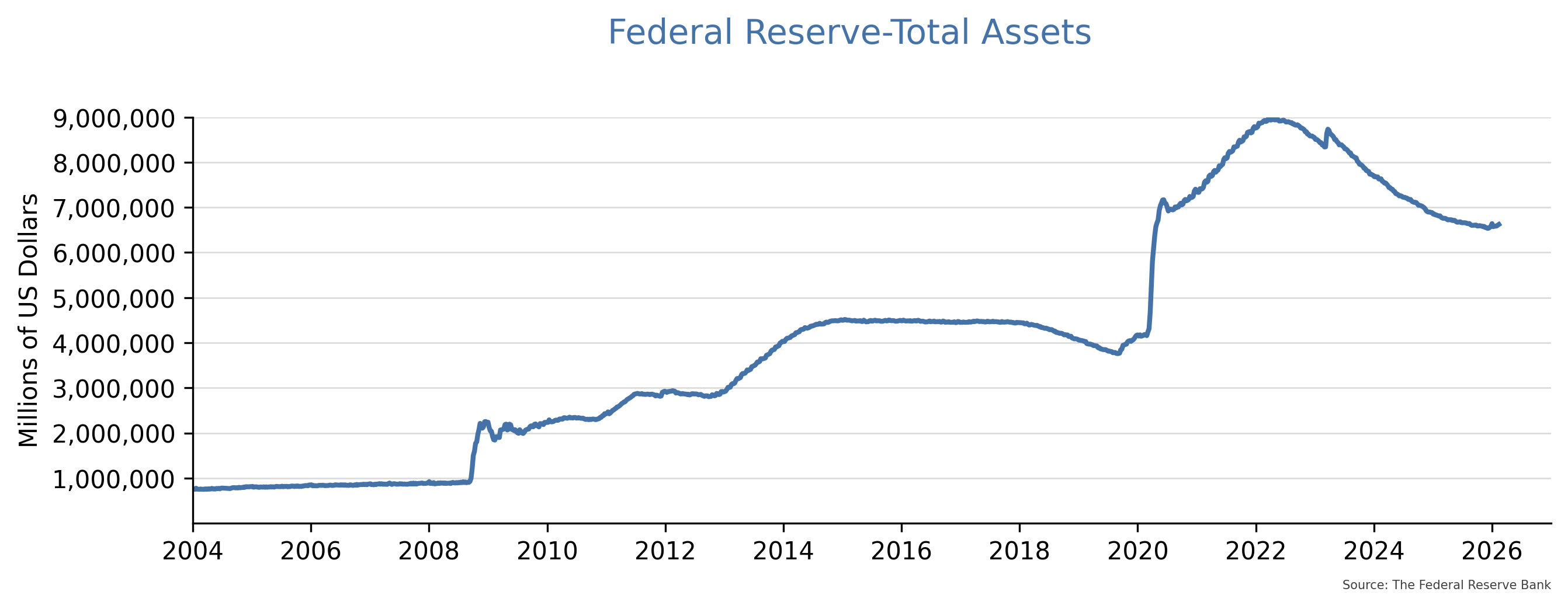
QE was deployed aggressively after the 2008 financial crisis and again during COVID. The Fed’s balance sheet expanded from under $1 trillion before 2008 to nearly $9 trillion at its peak. That expansion helped stabilize markets, but it also blurred the line between monetary policy and fiscal support, fueling criticism that the Fed was indirectly financing the deficit and inflating asset prices.
Kevin Warsh has been openly critical of QE. While he may support lower short-term rates under the right conditions, he has consistently argued that the Fed’s balance sheet should be materially smaller over time. In his view, the central bank should rely less on QE as a routine stimulus lever and return to a more traditional framework centered on interest rates rather than asset purchases.
Reducing the balance sheet, often called quantitative tightening (QT), means allowing bonds the Fed owns to mature without reinvesting the proceeds, or actively selling them. Warsh’s position suggests a leaner footprint.
That tension will define his tenure.
Productivity for 2026 and Beyond

Since the end of the pandemic, employers have been trying to balance productivity with employee satisfaction. It hasn’t gone well.
While up slightly in 2025, U.S. worker productivity has increased by a meager 1.8% since 2019. Meanwhile, according to Gallup, only 31% of U.S. workers are engaged in their workplace. Nearly 60 million Americans report suffering from some form of mental illness, and 50% say they are stressed at work.
Why You Need Strategy Today
Strategy has never mattered more than it does right now.
We are operating in an environment defined by geopolitical tension, technological disruption, political polarization, capital market volatility, and rapid shifts in consumer behavior. The range of possible outcomes has widened.
In calmer periods, leaders could afford to set a three-year plan and adjust annually. Today, that cadence is obsolete. When variables multiply, risk compounds. Tariffs can reshape supply chains overnight. AI can compress product cycles in months, not years. Energy shocks, regulatory shifts, labor shortages, cyber threats are not theories, they are realities.
We don’t need less strategy; we need it more often.
Companies that revisit strategy more frequently; quarterly scenario reviews, rolling forecasts, agile capital allocation, gain an edge. They are not reacting emotionally to headlines; they are responding to signals. When the world becomes less predictable, discipline becomes an advantage. Strategy provides alignment, filters noise and clarifies priorities. In a high-variance environment, clarity is currency.
Learn more about how we can help your company scale here: https://optimizeinc.net/strategic-planning/
Just our POV – A Global Chessboard
The Trump presidency has been mired by controversy; allegations of corruption, bruising immigration enforcement tactics, the Epstein files, and a governing style that often favors confrontation. His approval rating has hovered around 40 percent, a reflection of a deeply divided electorate.
Yet at the same time, Americans favorability ratings of Russia and China are in the teens. Two things can be true at once.
America was once respected and admired but evidently not feared by our enemies. An underfunded NATO, and passive posture among European nations did not offer enough deterrence to keep Russia from invading Ukraine. An emboldened Iran funded and supported the Hamas terrorists attack, and a highly successful propaganda campaign painting Isreal as the villain.
Now, America is less respected and admired, but perhaps more feared.
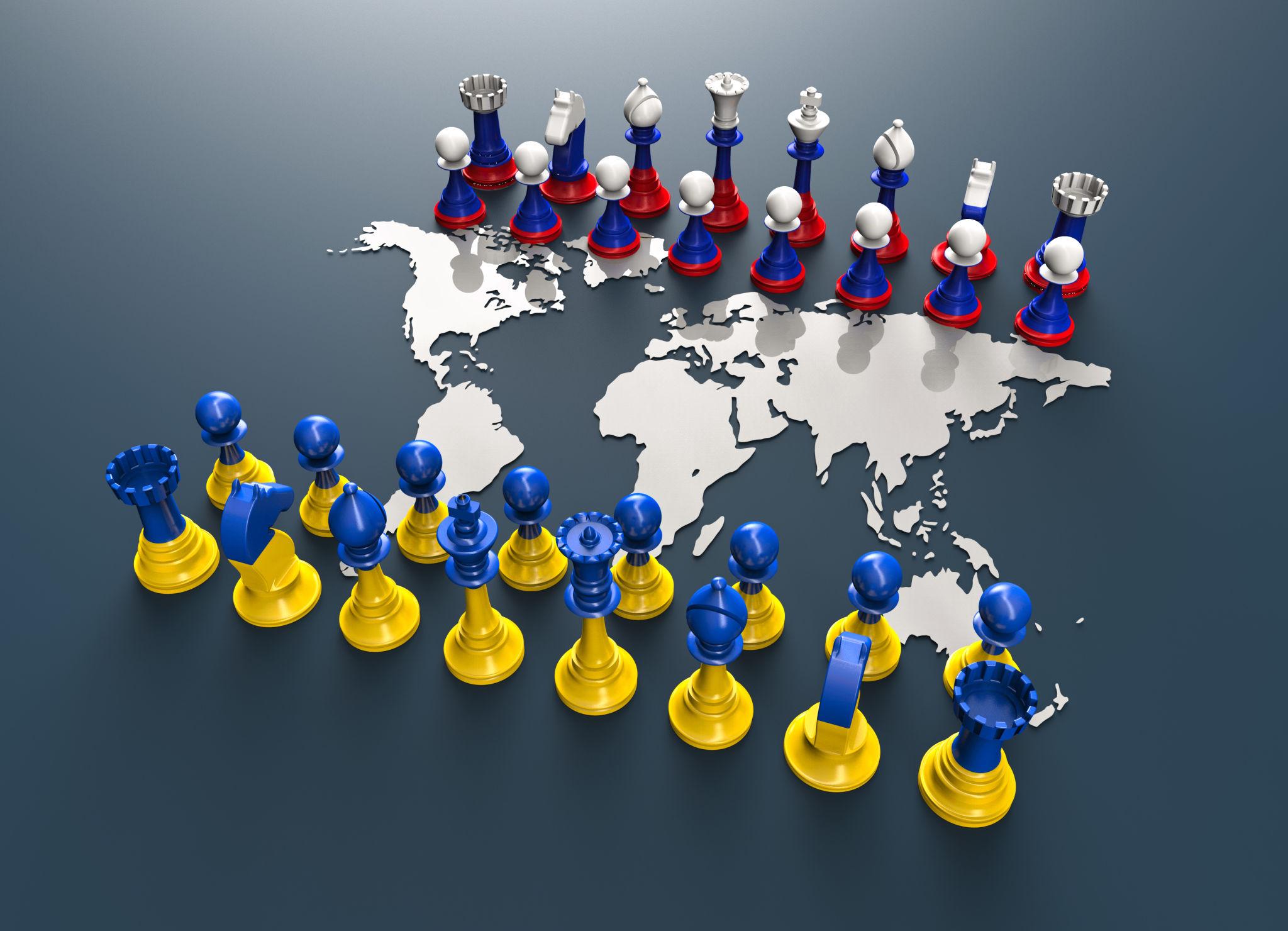
The global chessboard has changed. The alliance between Russia, China, Iran, North Korea, Cuba, and Venezuela is clear. These countries must be held accountable for their hacking, aggression, and non-compliance with treaties and international law. These are places where corruption is part of everyday life, minority groups are slaughtered, and women are marginalized.
Has Trump sunk to their level? Maybe. But we, as a nation, need to have better awareness of the game we are playing. The old rules of engagement no longer apply.
It appears that Maduro was just the first shoe to drop, as Venezuela was an easy and convenient target. It seems as if Trump will turn his attention to Cuba and Iran and attack his perceived enemies one by one.
But all of this feels like the prelim. The war machine is just posturing for the ultimate target, China, and especially an effort to deter a move on Taiwan. Trump knows a confrontation with a nuclear power is a zero-sum game, so he will bully the smaller targets first, just to let the world know he will.
China is the central square on the board economically, militarily, technologically (semiconductor dominance, artificial intelligence, and supply chain control). These are not side battles; they are the prize.
None of this absolves his rhetoric or tactics. Seeing our Vice President booed at the Olympics is sobering and embarrassing. To see our neighbors and friends disgusted by our politics, is disgusting. But if we are honest, we should also examine how we got here, so that history does not repeat itself. What America needs is moderation and not extremes.
Overly permissive border policies gave way to overly aggressive enforcement. Inconsistent NATO investment reinforced the perception of the U.S. as the world’s police force, only to have less-engaged allies criticize our tactics. Intensifying polarization on cultural and religious issues deepened distrust and constrained women’s and LGBTQ rights. A failure to align on a coherent climate and energy strategy left allies uncertain. Executive overreach and partisan extremism did not begin with Trump; he simply represents a different expression of it.
There will be a world after Trump. The chessboard will remain. America’s standing in the world has never come from being bullies, but it has never come from being passive in the face of tyranny either. Leadership requires both strength and restraint. If we want to maintain our standing as the greatest country on Earth, we must demonstrate the discipline to know when to apply pressure and the wisdom to know when not to.
Recommended Podcast –
All About the Next Fed Chair Kevin Warsh
President Trump was hardly subtle when he announced his pick of Kevin Warsh to be the next chairman of the Federal Reserve. He alluded to his looks in the announcement, and then actually used the phrase “central casting.”
The Strategy Experts


