

So much to unpack.
The U.S. attack on Iran (predicted on this page weeks ago) is a political tsunami. But from a market perspective, the financial impact is likely to be limited and short lived.
For weeks, global shippers have been quietly repositioning routes away from the Strait of Hormuz, anticipating retaliation from Iran or its proxies in that corridor.
Notably, oil has been trading at relatively subdued levels in recent weeks. Even if futures spike on the escalation, markets have room to absorb a modest move higher without triggering systemic stress. This is not 1973.
The Strait of Hormuz carries roughly 20% of global oil flows. A prolonged closure would meaningfully alter the calculus. But at present, what we are witnessing looks more like a volatility event than the start of an economic spiral. Equity markets had already priced it in, in recent days.
Not Your Father’s Inflation

The Supreme Court’s decision to void Trump’s tariffs sent shockwaves through Washington and Wall Street. Not only because the highest court in the land effectively halted a major pillar of the President’s economic agenda, but because it posed the question of unwinding tariffs that have already been collected.
Retailers who have already raised prices are unlikely to reverse course. Businesses and consumers are experiencing a kind of tariff whiplash. Tariffs took months to work their way into the market, and they will take many more months to unwind.
Equities reacted favorably to the ruling, an indication that investors view tariffs as inflationary.
Interesting timing. With a new Fed chair on the horizon, there is pressure building for rate cuts following a favorable CPI report. But a closer look at the data shows that recent inflation has been driven disproportionately by housing costs, not wage growth.
We know Trump, a real estate mogul by background, favors lower rates. The open question is whether the Fed will follow suit?
At the core of the administration’s calculus is the imperative to maintain consumer spending, which accounts for roughly 70% of U.S. GDP. The housing market rebounded in January after sharp December declines. There is a shadow ecosystem of homebuilders, contractors, mortgage brokers, and real estate professionals eager for cheaper money. They are chomping at the bit.
And it is not just housing. Sluggish sectors like domestic automakers; already under pressure from cheaper imports, would welcome lower financing costs to stimulate demand. The coming months will reveal whether the court’s ruling marks a meaningful pivot, or just another chapter in a volatile economic cycle.
Man vs. Machine?

The dominant narrative is saying that AI is coming for jobs. White-collar automation, structural unemployment, and all of that. According to the latest data, it just isn’t so.
In the most recent release from the U.S. Bureau of Labor Statistics, the economy continues to add jobs month over month, and unemployment remains just over 4% (full employment). Healthcare, construction, government, and segments of professional services are still expanding payrolls. If AI were eliminating roles at scale, we would expect to see greater deterioration in employment.
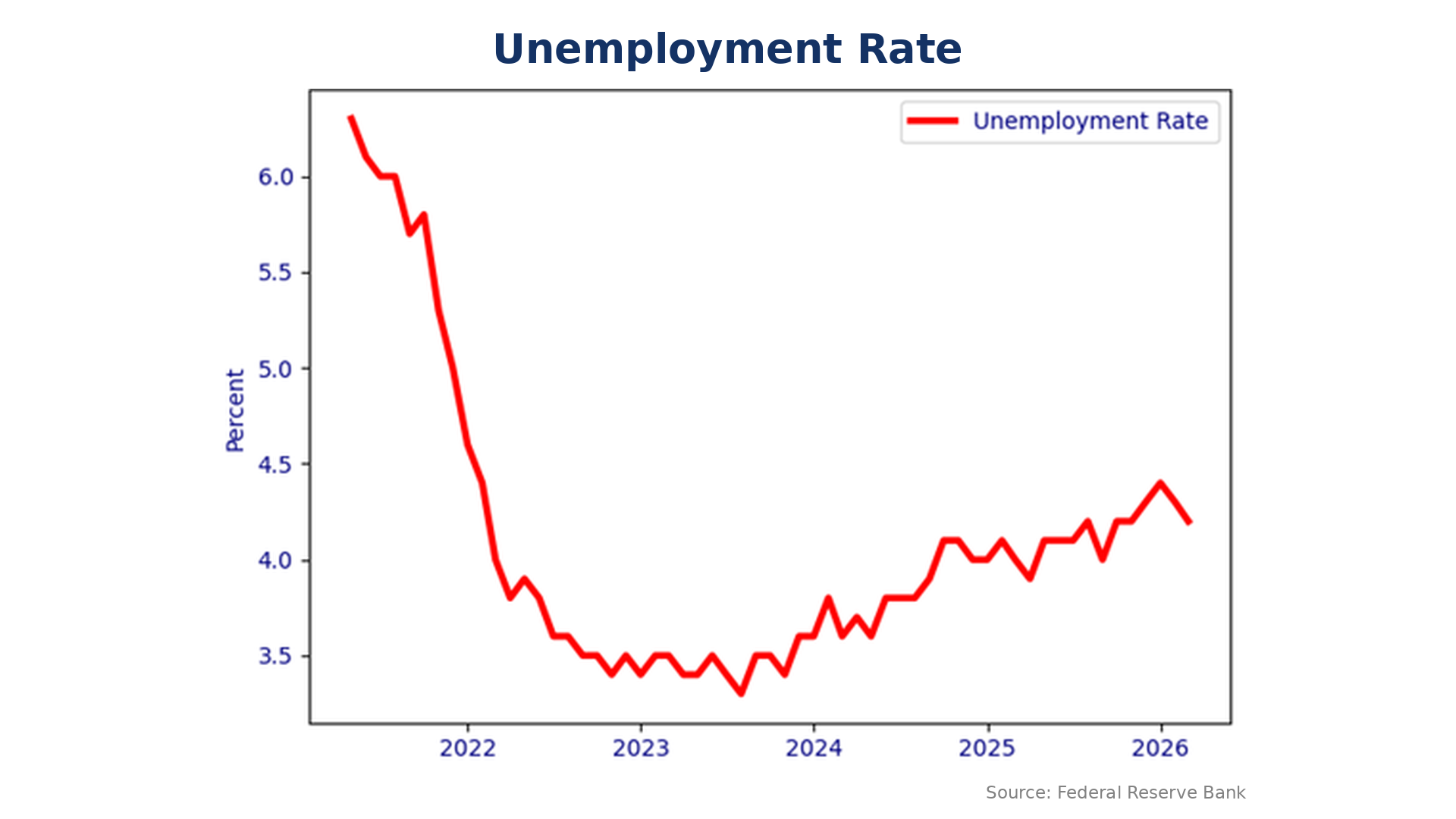
At the same time, national productivity numbers are improving, ever so modestly.
The mistake many executives make is framing AI primarily as a headcount story. The assumption is simple: if machines can perform cognitive tasks, then humans must be at risk. That framing is premature.
What we are seeing is augmentation, not replacement. Drafts get written faster. Research is synthesized more efficiently. Models are built and refined more quickly. Customer responses are generated in seconds instead of hours. So, our management lens such be staying the course on employment.
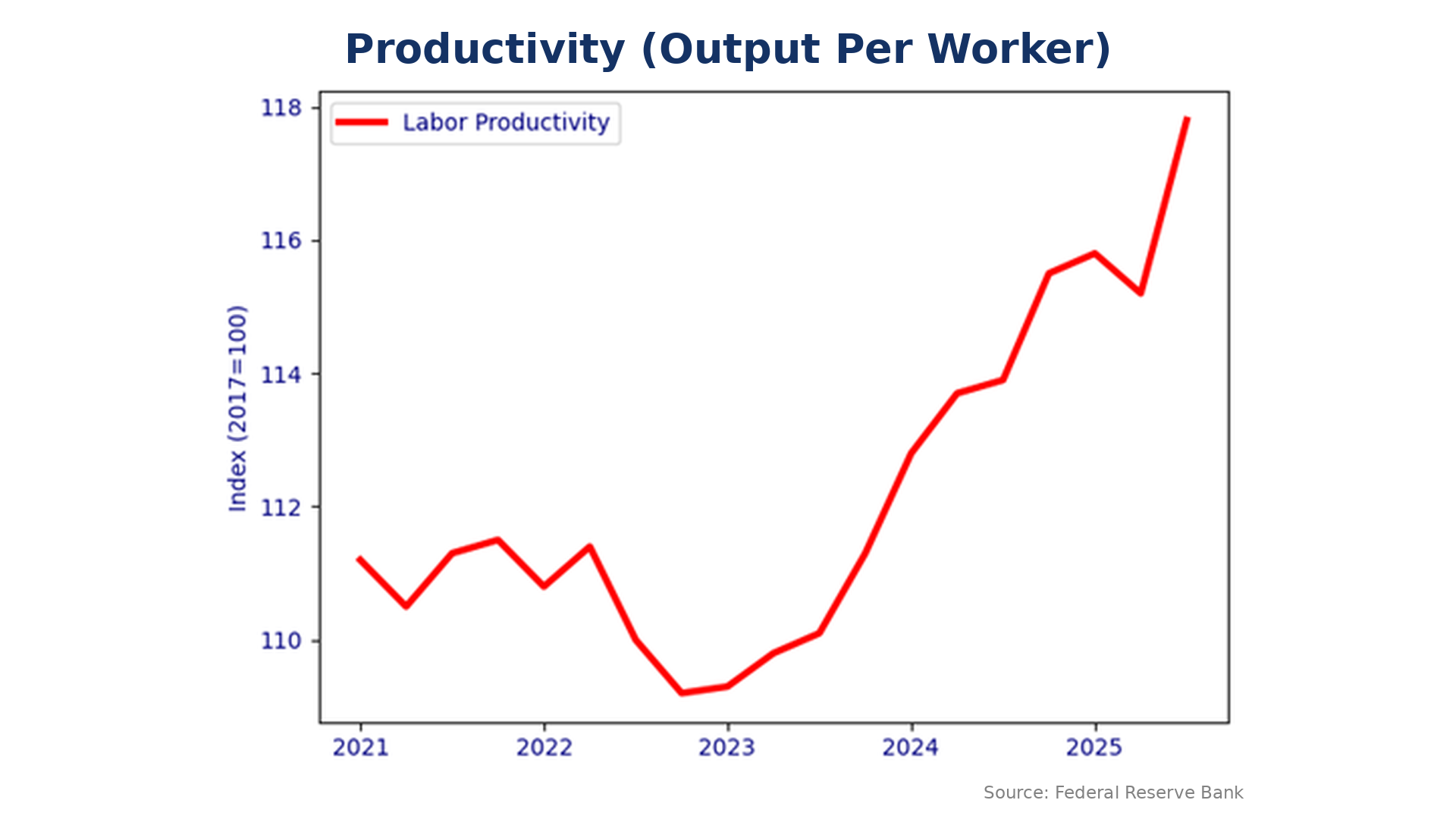
This is not man versus machine. It is man plus machine.
Structural productivity gains demand structural change, and that takes time. There is also a leadership gap forming in many organizations. Junior employees are experimenting daily with AI tools. Senior leaders are often debating policy without hands-on usage. That inversion is risky. You cannot lead technological change from a distance.
Five practical moves for CEOs:
- Use AI personally for real work for 30 days. Strategy starts with firsthand experience.
- Redesign roles before reducing headcount. Elevate human contribution instead of prematurely eliminating it.
- Make AI usage transparent and trainable. Quiet experimentation limits organizational learning.
- Measure workflow efficiency internally (cycle time, iteration speed, proposal velocity) rather than waiting for macro productivity confirmation.
- Anchor workforce decisions in actual labor data, not headlines. Watch monthly BLS employment and productivity reports.
The future is not man versus machine. It’s leaders who know how to combine them for greater productivity and profit.
Population Woes
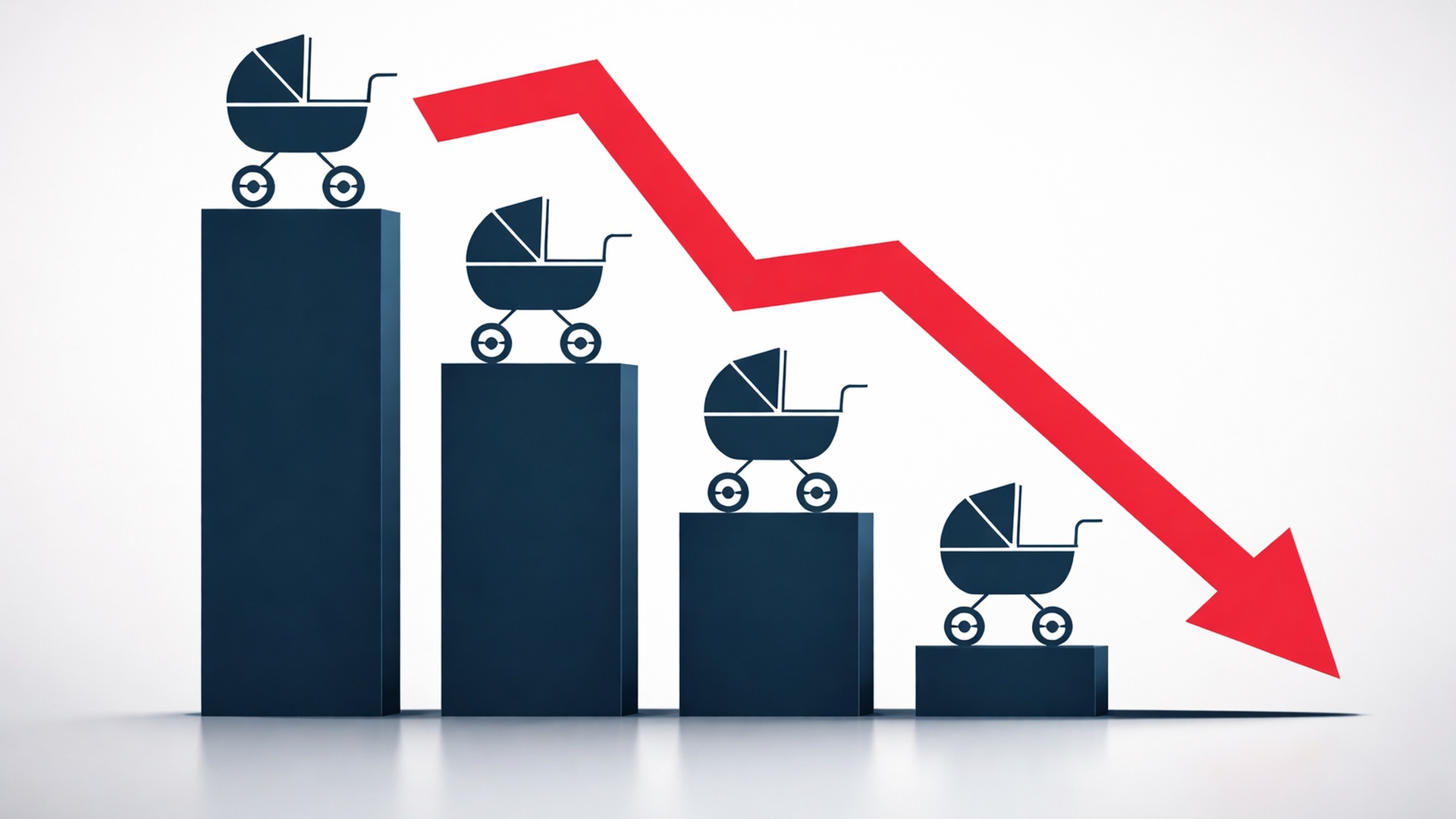
Many economists argue that declining birth rates are not just a demographic issue, they are a fiscal time bomb. Modern social safety nets were built on a simple premise: a growing base of younger workers would subsidize an aging population. When that pyramid inverts, the math no longer works. Fewer workers supporting more retirees places extraordinary strain on programs like Social Security and Medicare, while deficits quietly swell in the background.
We appear to be on the precipice of a profound population shift. Increasingly, young adults are choosing to delay having children or opting out entirely. Cultural shifts, economic uncertainty, student debt, housing costs, and political polarization all play a role. But whatever the cause, the numbers are clear. The Congressional Budget Office has reported a sustained decline in U.S. birth rates, well below the replacement rate needed to maintain long-term population stability.
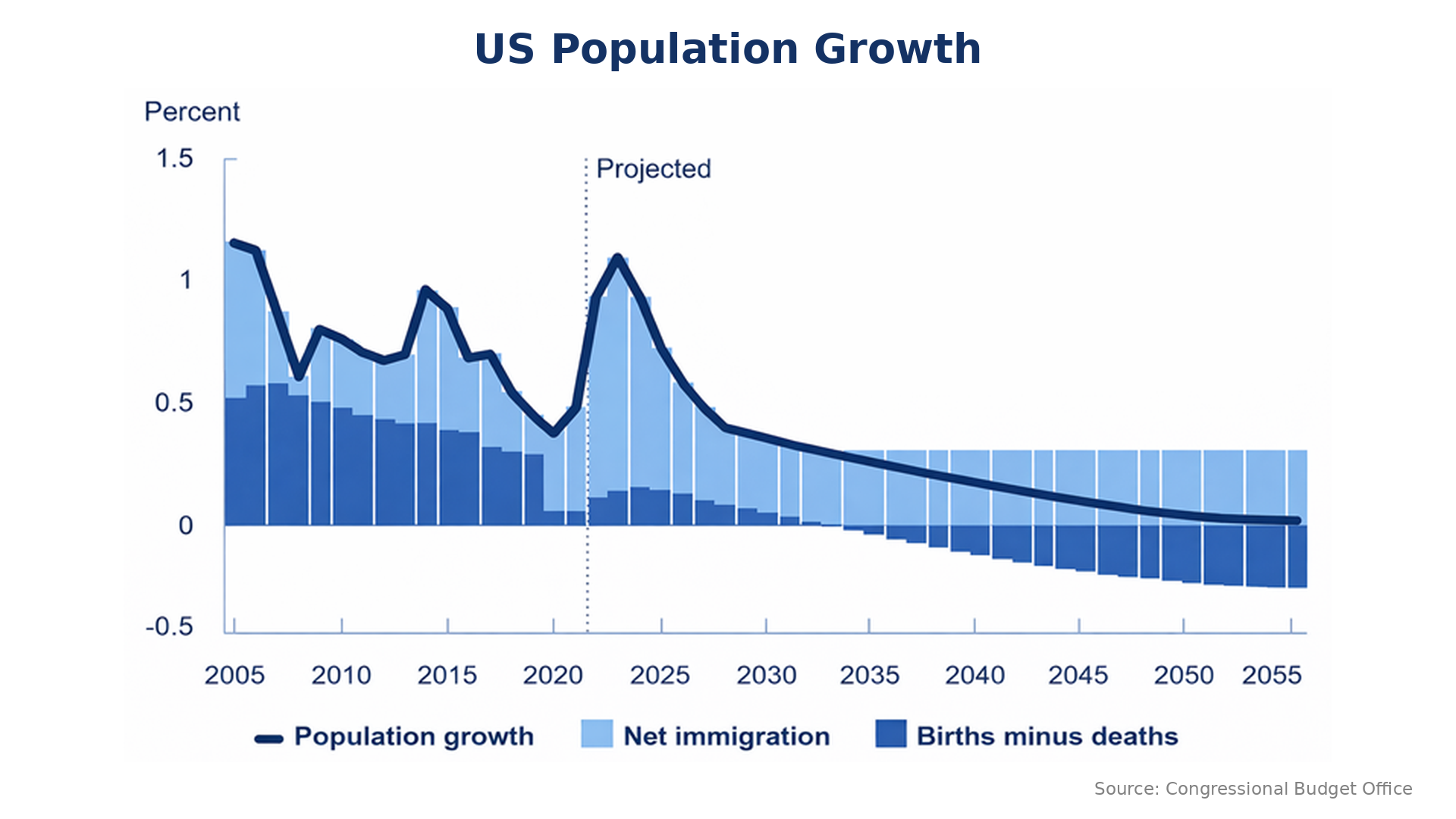
The implications are significant. A smaller working-age population means slower labor force growth, weaker tax revenue expansion, and mounting pressure on entitlement programs. If projections hold, the Social Security trust fund is expected to face depletion within the next decade, forcing either benefit reductions, tax increases, or further deficit financing. Lower birth rates do not create the debt problem, but they exacerbate it.
The Strategy Playbook Masterclass
Missed out on our Masterclass?
Most strategy conversations focus on what is happening inside your organization. But the best performing companies are equally disciplined about monitoring what is happening outside, shifts in demand, customer behavior, and market signals that shape the future.
That is why we created the Strategy Playbook Masterclass, a free series where we share:
- How to identify external demand KPIs before they show up in your financials.
- Practical frameworks to connect market trends to your strategic plan.
- Ways to align your leadership team around the signals that matter most.
If you have not subscribed yet, it’s available at no cost here: https://zc.vg/cvEln
It is not theory; it is what we use with mid-market executives every day to stay ahead of disruption.
Marcs Minute – Latest LLM Tips and Tricks

Checkout the latest improvements in large language models that will improve your productivity and save you time.
Recommended Podcast –
Diary of a CEO – Sleep Doctor

Sleep Doctor: If You Wake Up At 3AM, DO NOT Do This!
Are you always tired? Sleep Expert Dr. Michael Breus breaks down the 4 chronotypes to master your sleep, how to fix insomnia, the truth about sleep apnea, and why the 8-hour myth is wrong!
The Strategy Experts

Marc Emmer is President and Chief Strategist & Facilitator at Optimize Inc. He is an author, speaker and consultant recognized as a thought leader throughout North America as an expert in strategic planning.


