
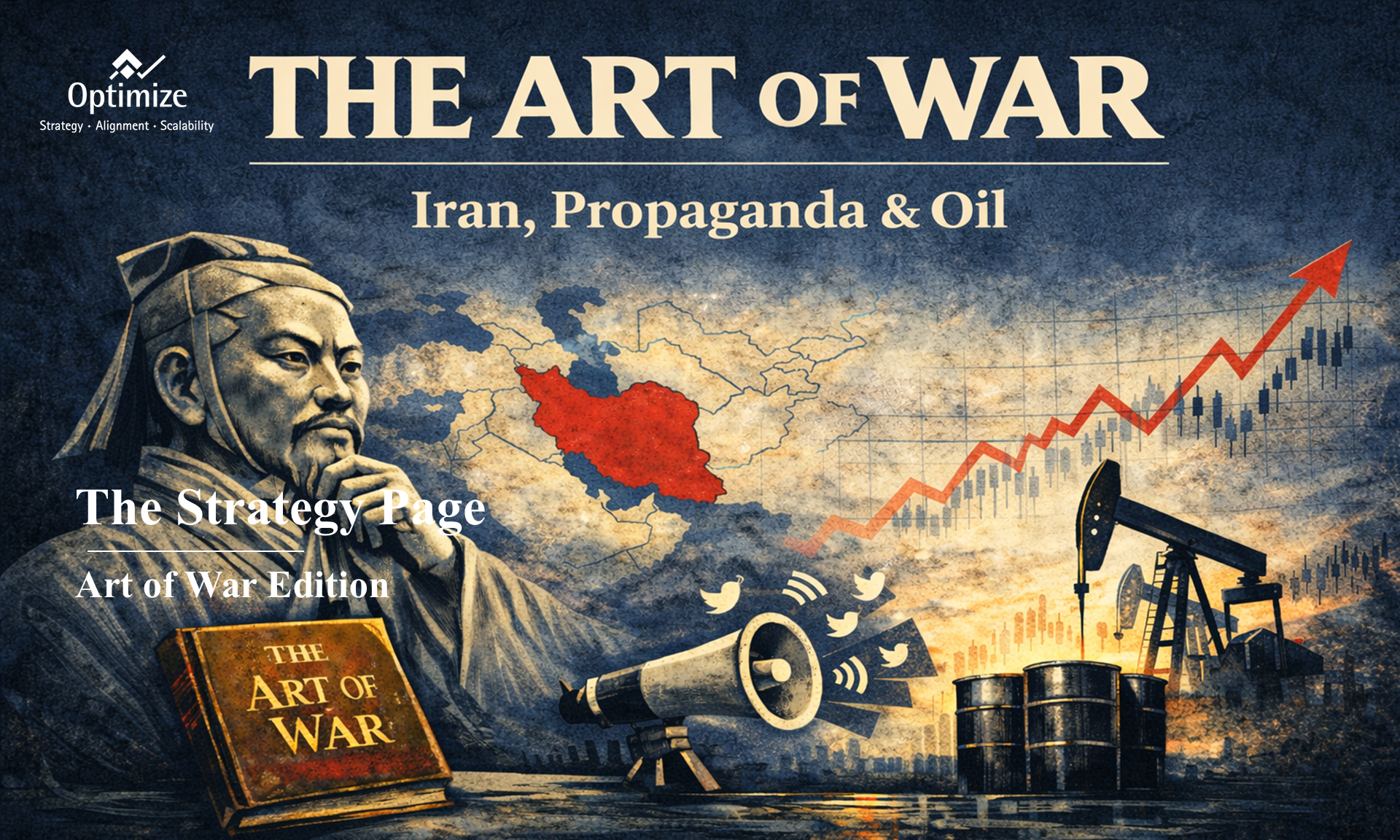
Sun Tzu’s The Art of War was written over 2,500 years ago and is considered the seminal work on military conflict. Much of what we are seeing in the Middle East today follows principles that have been around for centuries.
The war in Iran is not simply a regional military struggle. It is a multi-domain contest involving proxies, economic chokepoints, propaganda campaigns, and strategic cost imposition. While the U.S. relies on intelligence and military prowess, the Iranians are masters of guerrilla warfare.
At the heart of strategy is deciding what battles to fight. For private companies, this means being very specific about what markets to enter, and which competitors to take on. Typically, this translates into companies being too broad with their targeting, taking on too many customer prospects, in too many markets against too many competitors. By being more targeted, you can also be more competitive.
There are business lessons to be learned from this conflict. Below are several principles from The Art of War.
Attack Weakness, Avoid Strength & All Warfare is Based on Deception
Sun Tzu’s most famous advice is simple:
Avoid what is strong. Strike at what is weak.
While the U.S. is clearly dominating the war, Iran is winning the propaganda campaign. They are fighting a war of information.
Foreign influence in the U.S. is not theoretical; it is clearly documented. Researchers have analyzed more than 1.5 million tweets tied to coordinated state-linked influence campaigns designed to stoke divisions in the U.S. regarding foreign policy.
Microsoft’s Threat Analysis Center has also reported Iranian actors deploying AI-generated news sites and coordinated social-media accounts to shape online discourse. This has taken the form of bogus Bernie Sanders and Elizabeth Warren accounts (among others) that fan the flames. The war is very unpopular, but watching the news you would not have any idea that roughly half the American population either supports the war or is neutral (according to polls by Reuters, The Washington Post, and The Economist).
In recent conflicts, Hamas and other groups have often controlled the early narrative around civilian casualties and battlefield events. Casualty numbers released during fighting frequently include militants and fighters in the totals. Yet they are reported internationally as civilian deaths, often in venues where military targets were placed in or adjacent to civilian areas.
They also control the narrative in their own country, through religious rule, and squashing dissent. They marginalize groups including women, manipulate the press and access to the internet.
Meanwhile, Qatar has pursued a parallel influence strategy, providing over $62 billion in funding to U.S. universities to build relationships and shape policy discussions. The strategy is inexpensive but effective.
In July 2024, the U.S. Director of National Intelligence, Avril Haines, warned that Iran was trying to exploit protests in the United States related to the Gaza war, including provided financial support to protesters.
No strategist looking at the global balance of power would conclude that Iran could defeat the United States or Israel in a conventional war.
So, Iran rarely engages directly. Instead, it works through proxy groups across the region including Hezbollah in Lebanon, Hamas in Gaza, the Houthis in Yemen, and militia networks in Iraq and Syria. These organizations provide Iran with plausible deniability while extending its reach across several theaters simultaneously.
Iran’s hacking exploits are well documented. U.S. cybersecurity agencies report that Iranian state-sponsored actors routinely engage in tactics like phishing, denial-of-service attacks, and malware to infiltrate systems and steal or destroy data.
When shipping lanes are attacked in the Red Sea, when rockets are fired from southern Lebanon, or when militants strike targets in Iraq, the pressure spreads across multiple fronts. Stronger power must respond everywhere at once.
The result is exactly what Sun Tzu predicted: the stronger army becomes stretched, distracted, and expensive to operate. In Sun Tzu’s language, this is an attempt to “break the enemy’s resistance without fighting.”
How does this apply to businesses? Never attack your competitor at their strength. When 5-Hour Energy entered the very competitive beverage market, they did not take on Coca-Cola, Pepsi, Monster, and Red Bull (who sponsor two Formula One teams) at their point of strength. Instead of being in the grocery aisle or refrigerated sections (which require costly slotting), they placed their product at the check stands of convenience stores. They “hit ’em where they ain’t.”
Prolong the Conflict
Sun Tzu warned rulers about long wars. Sustained conflict drains resources and morale.
But for a weaker actor, a prolonged war can actually be the objective. Iran and its proxies often pursue strategies that stretch conflict across months or years rather than seeking decisive battles.
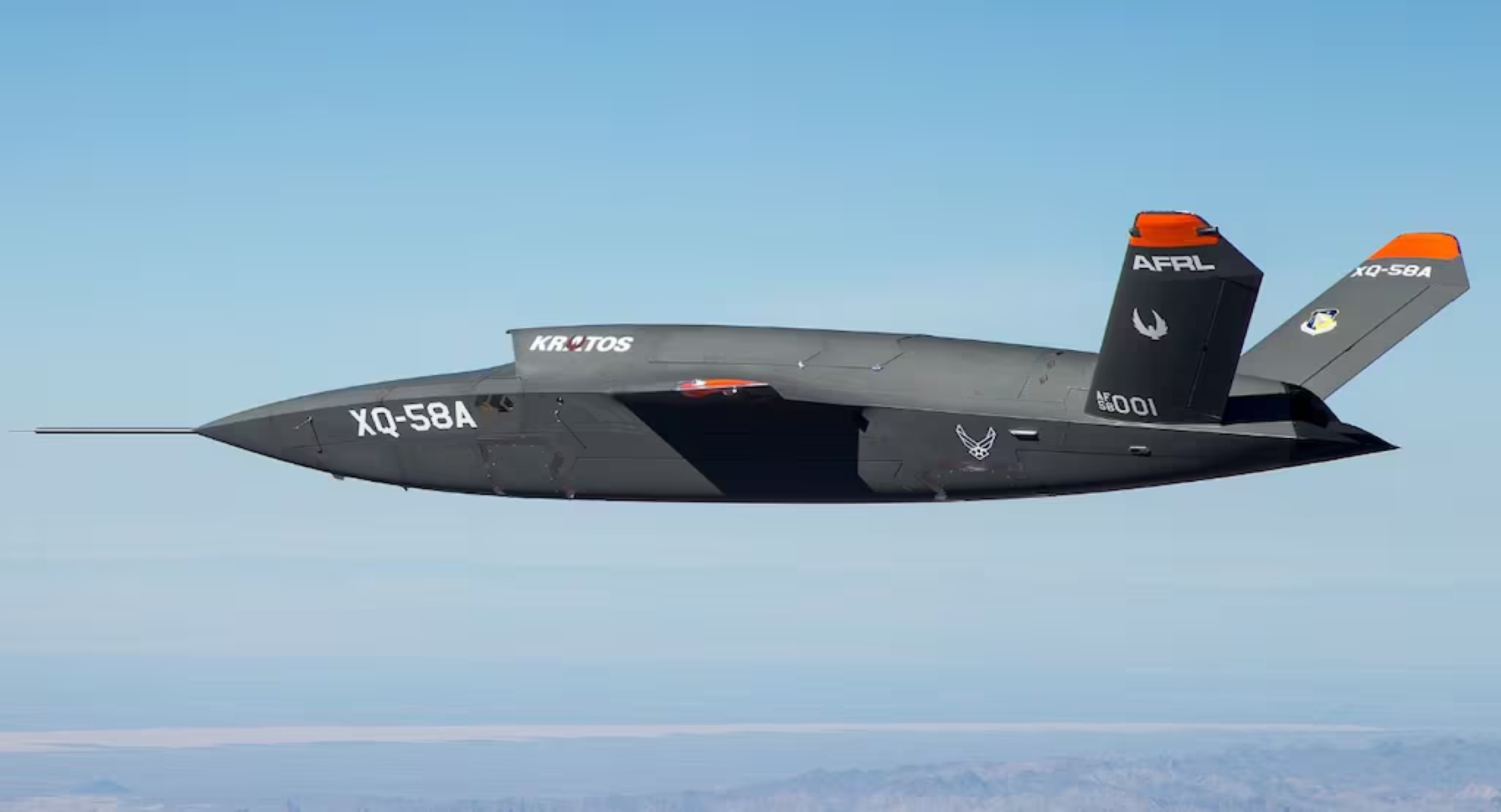
The United States and its allies operate expensive platforms: aircraft carriers, missile systems, precision weapons, and intelligence networks. Every day of sustained operations costs enormous sums.
Meanwhile many proxy forces operate with low-cost equipment and irregular fighters. Sun Tzu described this dynamic clearly: “There is no instance of a country having benefited from prolonged warfare.”
In the business context, many business development people simply run out of patience. It is well understood that it often takes seven or more touchpoints for a prospect or customer to hear your message. One way that smaller competitors can win is simply to care more about the outcome, especially with smaller customers that may not get the same attention.
Force the Enemy to Spend More Than You Do
One of the most fascinating strategic dynamics today is cost-exchange warfare.
Iran and its partners have used inexpensive drones and rockets to trigger expensive defensive responses. A Shahed-type drone may cost tens of thousands of dollars, a Patriot missile interceptor can cost around $4 million, and Naval interceptors such as SM-6 missiles cost several million dollars each.
This creates a dramatic imbalance.
Sun Tzu understood the importance of cost. Efficient warfare is not just about victory; it is about achieving objectives with the lowest expenditure of resources.
In today’s commerce, large brands (and even B2B companies such as ERP providers) will often use traditional methods for advertising in trade conferences and trade magazines. It is a method to reach the most people.
But smaller competitors can use social media, including video (and even Tik Tok), to convey their message. Consumer education is a particularly effective method for expanding a brand. Also, by serving “long tail” (smaller) customers, more nimble firms can win deals without much competition.
Attack the Enemy’s Strategy, Not Just Their Army
Sun Tzu wrote that the highest form of warfare is attacking the enemy’s strategy itself.
That principle shows up clearly in the Middle East through the targeting of economic chokepoints, particularly energy. Few geographic locations matter more to the world economy than the Strait of Hormuz.
Many are confused about why Iran would strike its neighbors. The goal is to pressure these countries to expel American forces by extorting their oil infrastructure.
Roughly 20% of global oil consumption moves through that narrow passage each day. When threats emerge around the strait, even the possibility of disruption sends shockwaves through energy markets.
In effect, energy disruption becomes a form of economic warfare, or what some analysts increasingly describe as economic terrorism.

Why Oil Prices are so Volatile
Oil is uniquely sensitive to geopolitical events for structural reasons.
Unlike many commodities, both supply and demand for oil are relatively inelastic in the short run. Oil is the carrier fuel for oil, creating an exponential effect.
People cannot suddenly stop driving. Airlines cannot suddenly ground their fleets. Factories cannot instantly replace diesel generators or petrochemical feedstocks.
At the same time, increasing oil supply takes time. New wells, pipelines, and refineries require years of development.
That mismatch means small disruptions can trigger large price swings. Oil powers transportation, aviation, and construction equipment. It is also a key input into plastics, chemicals, asphalt, and industrial materials.
When oil prices spike, the shock spreads quickly across supply chains.
Fuel costs rise. Freight costs rise. Manufacturing costs rise. Even without shutting down oil flows entirely, creating uncertainty around supply can move prices significantly.
The Modern Strategic Lesson
When we view the conflict through the lens of The Art of War, several lessons become clear.
First, weaker powers rarely attempt to defeat stronger ones directly. Instead, they rely on indirect strategies, proxies, cost imposition, propaganda, and economic disruption. Guerilla marketing can beat traditional marketing, when applied correctly.
Sun Tzu wrote that “supreme excellence consists of breaking the enemy’s resistance without fighting.”
We won’t comment on the politics of war. But nothing in this post minimizes the human toll of war. Many lives (including civilians) have been lost, and that is a tragedy.
We only point out that history’s oldest playbook is still being used. There are lessons here for all of us.
Marc’s Minute – Law of Attraction
Marc’s Minute – Change Management
Many companies struggle with implementing new initiatives. This seven step guide will help you to manage change.
The Strategy Experts

Marc Emmer is President of Optimize Inc. He is an author, speaker and consultant recognized as a thought leader throughout North America as an expert in strategic planning.


