
We love to play games.
Recent events point to the acceleration of gamification across the economy. Savvy marketers have tapped into the underlying psychology that drives human behavior and have figured out how to monetize it.
A recent case involving Meta (parent of Facebook and Instagram) around addictive design practices was something out of a court room drama. At the center of the case was the claim that core features were engineered to trigger dopamine responses, creating behavior patterns that resemble dependency.
Every time Jerome Powell or Marco Rubio hold a press conference, there are thousands of bettors waiting with bated breath to hear what they have to say. Prediction markets have become high-octane, fast-twitch betting venues, where you can wager on how many times a speaker mentions the word “Trump” or “gas prices.” You can even bet if the U.S. government will recognize aliens in 2026.
A parallel set of legal challenges is emerging around prediction markets such as Kalshi and Polymarket. Several states are moving to restrict or ban these platforms, not just due to financial risk, but because of what neuroscience makes clear; gambling activates the same neural pathways as drug addiction.

The rise of micro-betting wagers on discrete moments within a game, such as the next pitch or first touchdown, compresses the cycle of anticipation and reward. Instead of waiting hours for an outcome, users experience dozens of betting events in a single session. The result is simple: more interactions, faster reinforcement, and higher engagement intensity. Prediction markets monetize transaction volume. The more frequently a user engages, the more valuable they become.
Gamification is highly effective. Used appropriately, it drives loyalty, improves experience, and reinforces behavior. The mechanics that drive engagement in these platforms can be used constructively to engage employees and customers.
Companies are building sophisticated communication systems and ensuring they engage more frequently utilizing multiple modalities. If for example you are running HR initiatives, culture programs, or strategic priorities, they cannot live in an annual survey cycle. They must be visible, repeated, and offered in bite sized pieces.
It also helps if you can have fun doing it.
Social Security Meltdown
Speaking of the games we play.
While U.S. politicians on both sides of the aisle are distracted by their pet issues, a day of reckoning is coming. The eventual insolvency of Social Security is a ticking time bomb.
According to the Social Security Trustees (2024), the Old-Age and Survivors Insurance (OASI) trust fund is projected to be depleted by or before 2033. At that point, incoming payroll taxes will only cover roughly 75-80% of scheduled benefits, triggering an automatic reduction of approximately 20-25% across the board.
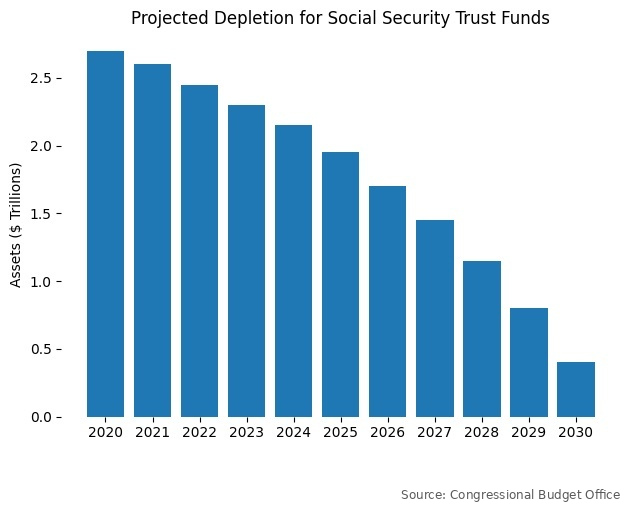
Unlike other variables in our economy, this is a certainty if Congress does not act soon.
It is simple math. Fewer workers are supporting more retirees, and people are living longer. The system was designed when life expectancy was shorter and the ratio of workers to beneficiaries was materially higher.
There are only a handful of viable policy solutions:
- Raise or eliminate the payroll tax cap.
- Introduce some form of means testing.
- Increase the retirement age.
- Adjust benefit formulas including caps.
It is more likely that the solution is a formulaic combination of these measures, with a gradual increase in the retirement age being almost certain. Given that Americans are living longer and healthier lives, extending working years is not just logical, it is likely.
Reality is setting in. It is quite possible that higher-income Americans may not receive their full benefits (don’t shoot the messenger). In fact, reading the tea leaves, one might expect that when our political leadership changes, affluent Americans will most certainly pay more taxes. A different interpretation of social security benefits and taxes is a threat that older workers planning their retirement should take seriously.
What is far more concerning is the continued delay. Each year of inaction narrows the range of options and magnifies the pain.
This is a failure of political leadership on both sides of the aisle.
Are the Dodgers Ruining Baseball or Reinventing It?
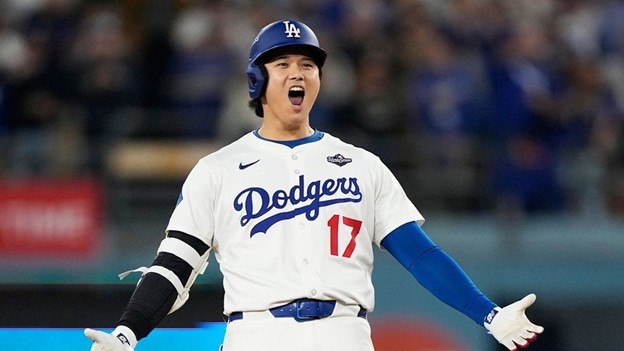
When the Dodgers signed Shohei Ohtani to a $700 million contract, along with several other marquee players, the reaction was immediate, the Dodgers are ruining baseball.
Not so simple.
With roughly 97% of Ohtani’s salary deferred, the Dodgers turned a headline number into a long-term financing strategy. Then they doubled down, adding 3 Japanese pitchers drawn to Ohtani’s presence and global reach.
In 2026, the Dodgers entered a reported partnership with Uniqlo, naming the playing surface “Uniqlo Field at Dodger Stadium”; the first field-level sponsorship in franchise history.
Industry estimates suggest the Uniqlo deal alone is worth $25-$40 million annually. Add Japanese sponsorships, media rights, and merchandise tied to Ohtani, and total Japan-driven revenue likely reaches $50-$70 million per year.
The economics inside the stadium reinforce the model. The Dodgers consistently draw roughly 3.8-4.0 million fans annually: by far the highest in baseball. The Dodgers’ Japanese player costs, with Yamamoto at $27M annually and Ohtani’s minimal near-term cash impact due to deferrals, are partially offset by sponsors.
The Dodgers aren’t just acquiring talent, they’re budling new demand and monetizing it. What player wouldn’t want to play for the Dodgers?
It would be more accurate to say the Dodgers are reinventing modern baseball and outsmarting the competition.
White Paper – 21 Ways to Differentiate any Brand

Every entrepreneur understands the need for uniqueness, but true differentiation is elusive for most. This white paper is intended to provoke thought on leveraging differentiating strategies (assuming a company is not the low-cost leader in its space). Low-cost leaders are usually the largest companies, or those who have developed disruptive technologies at scale.
In this video we explore how companies go about planning and execution and how it changes as they go through their lifecycle. As it relates to strategy, what got you here will not get you there.
The Strategy Experts

Marc Emmer is President of Optimize Inc. He is an author, speaker and consultant recognized as a thought leader throughout North America and as an expert in strategic planning.


