

On the Strategy Page, we thoughtfully examine a range of business trends that inform our clients in the formation of strategy. In our annual trends series (see below), we focus on technology, economic, social, workforce, and political trends shaping our world.
But today, AI is sucking all the oxygen out of the room. It seems that no global topic can be considered without examining how it is being shaped by AI. We will make the case that American prosperity, national security, and even our health will be attributed to the AI buildout, which is a point of contention for many U.S. households.
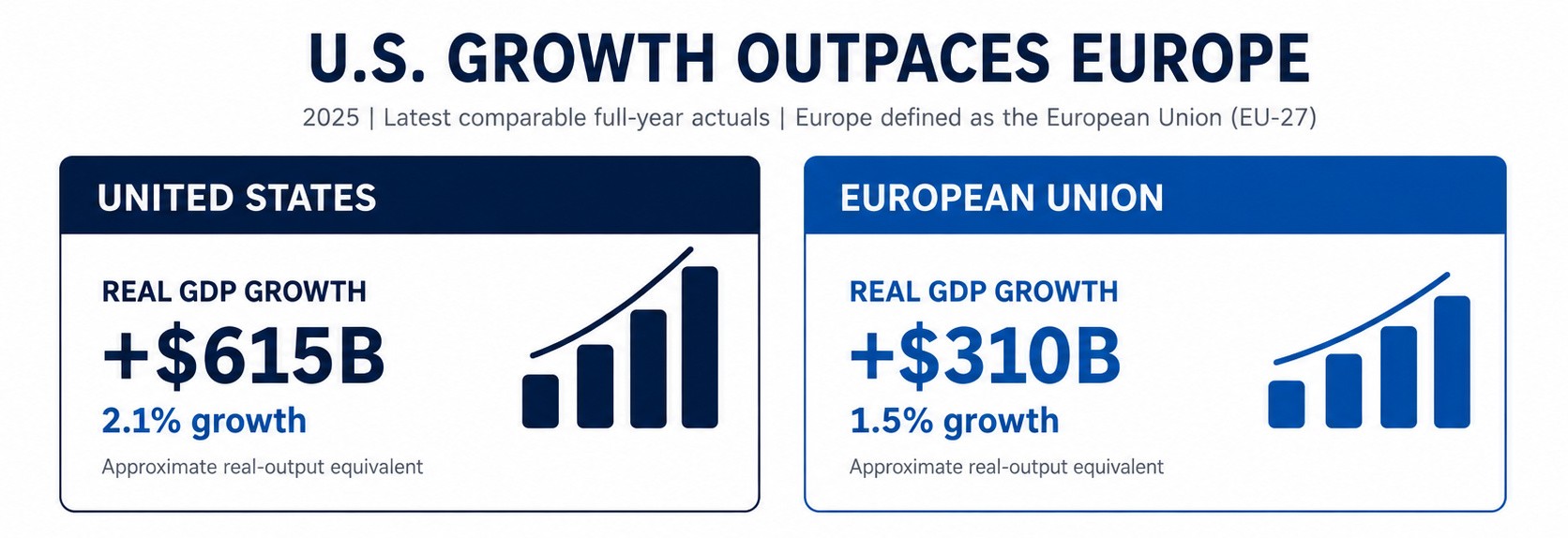
Consider the comparison between the U.S. and European economies. It is said that you should make your money in the U.S. and spend it in Europe. We are doing a lot of that because, without U.S. tourism, Europe’s economy would be even worse than it is today. Much of the difference in economic growth between U.S. and Europe can be attributed to the AI boom, where the U.S. is leading, and European compliance rules constrain innovation.
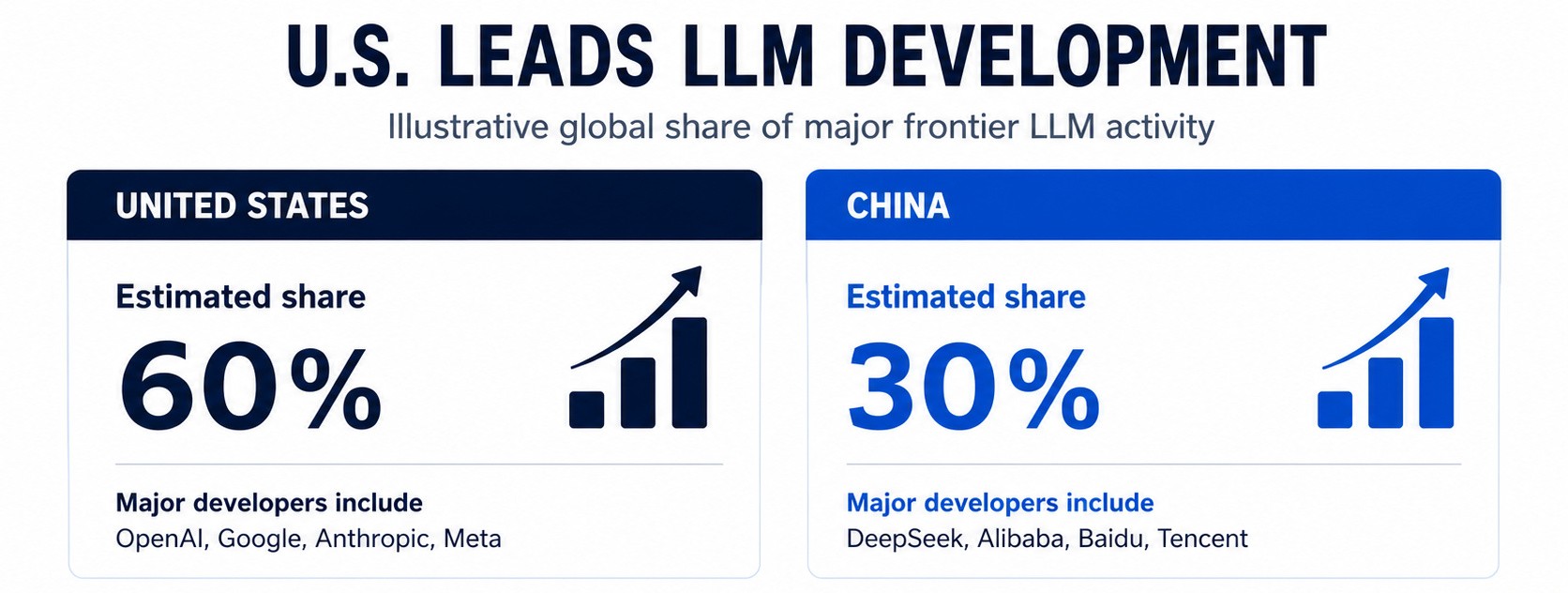
The AI buildout is also the source of the United States’ most important strategic advantage. The United States and China are locked in a compute arms race. Compute, the infrastructure required to operate AI is of paramount importance. The United States controlled an estimated 74% of global high-end AI compute through July 2025, versus 14% for China. Yet China added electric-generation capacity at more than 15 times U.S. investment.
Chinese providers are attacking on price. DeepSeek’s newest coding model reportedly delivers near-frontier performance at a fraction of the cost of premium U.S. models. But rising Chinese token consumption does not prove superior efficiency. Token volume measures usage. Lower prices, open models, and developer adoption can generate enormous traffic even while the United States retains the lead.
Paradoxically, compute could create a new détente. Both countries depend on interconnected technology systems. But détente works only when both sides believe the other can retaliate and when guardrails prevent an automated mistake from escalating faster than diplomats can respond.
Robot Wars
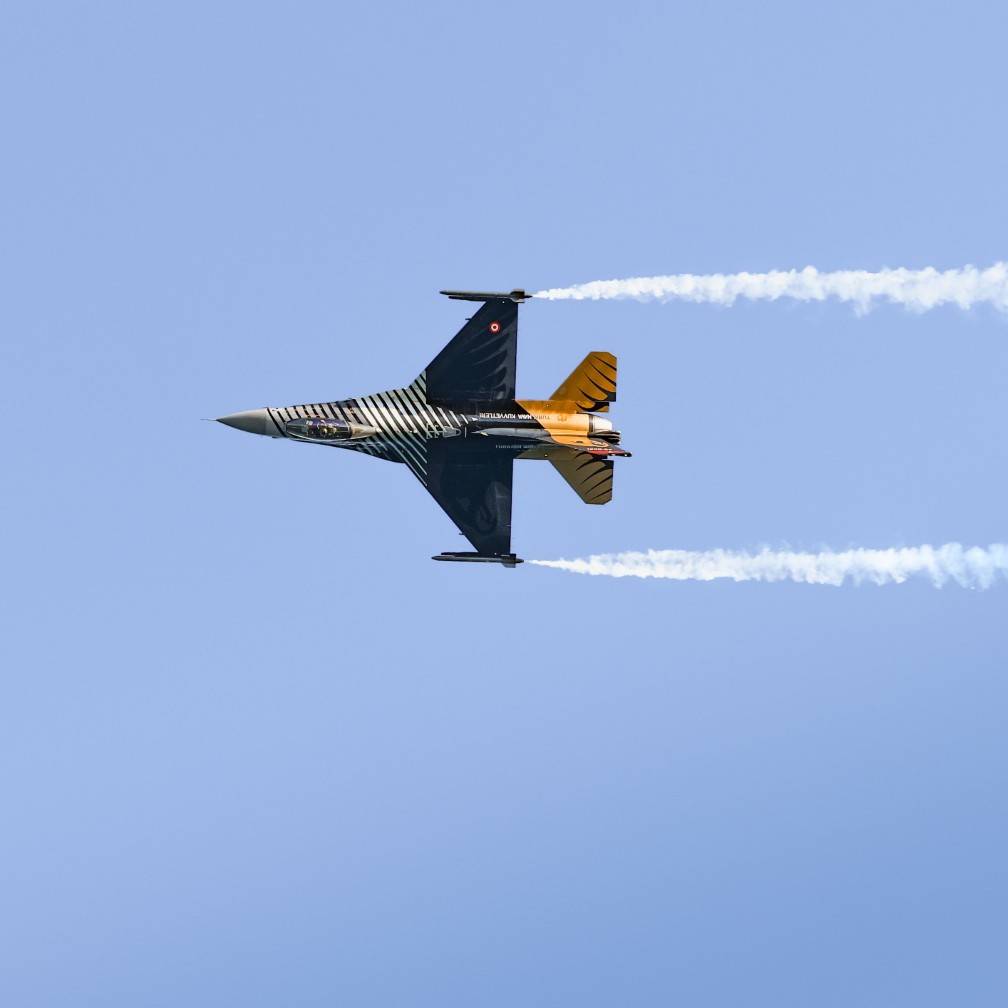
AI compute is critical to our national security.
The conflict in Iran has revealed the future of AI warfare. Future wars will involve pinpoint munitions capable of striking an intelligence building or a military leader’s compound with remarkable accuracy.
Surveillance feeds, satellite images, communications intercepts, and battlefield reports can be processed in minutes rather than days. U.S. forces have used AI to support intelligence analysis, target prioritization, mission planning, and post-strike assessment. The result is greater precision and an accelerating pace of war.
The next step is autonomous and semi-autonomous drones. Loitering munitions can circle an area, identify a predesignated target, and dive onto it. Newer systems are designed to resist jamming and continue operating when communications are severed. U.S. Special Operations Command is seeking aircraft-launched, one-way attack drones with automatic target recognition.
Low-cost drones can wait and strike a mobile command post, missile launcher, or leadership compound without risking a pilot. The cold, hard reality is that bad actors will have access to such munitions in abundance.
The Data-Center Construction Supercycle
While the AI buildout is critically important, there is “not in my backyard” sentiment permeating our culture. It is expected that there will be data center bans proposed in many communities in the next election cycle.
U.S. data-center construction spending reached a $50.7 billion annual rate in April 2026, up 28% year over year. For the first time, it exceeded all public transportation construction spending. Data centers now represent the largest component of private office construction.
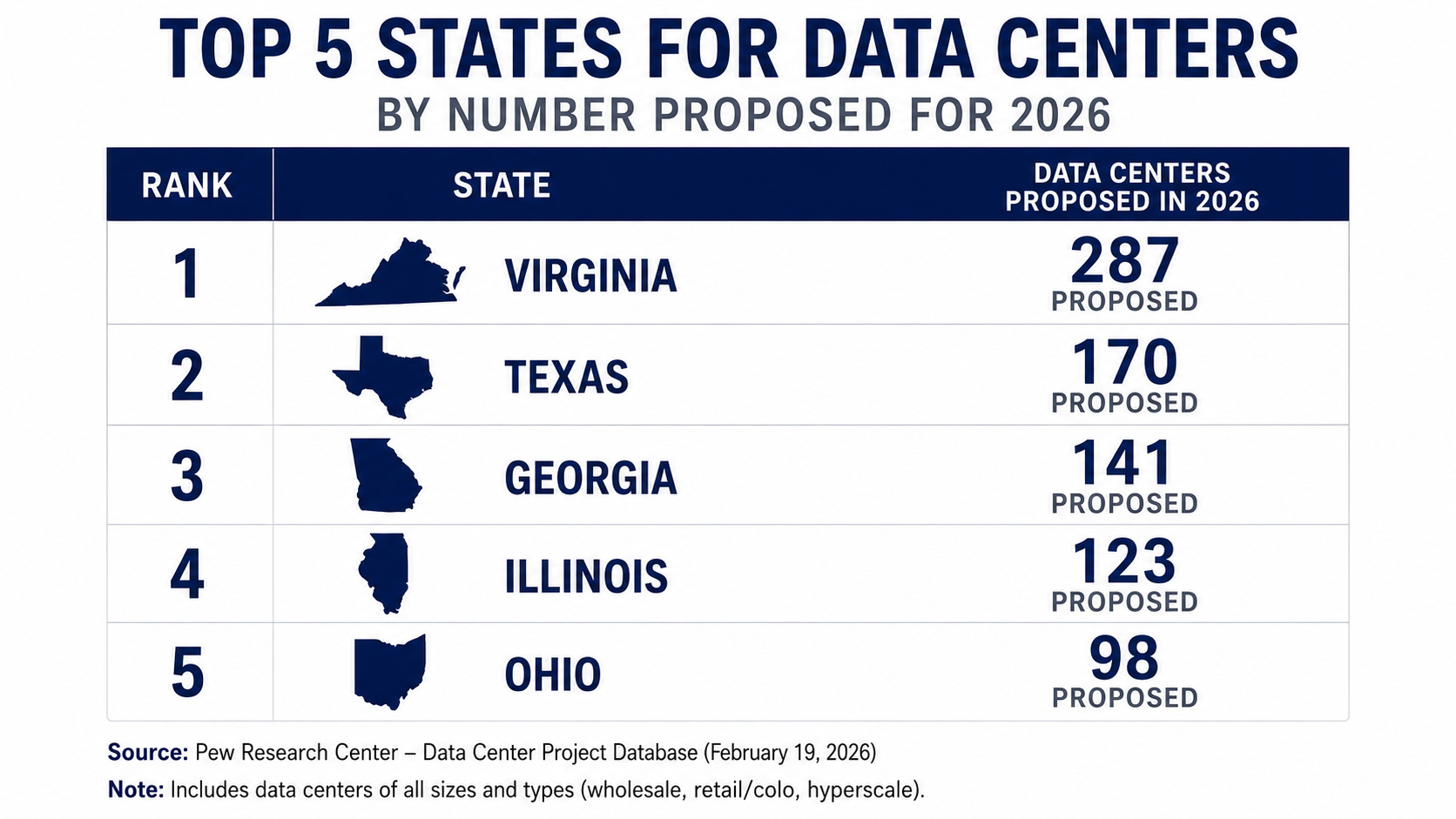
That money is creating a boom for electrical, mechanical, and civil contractors. It is also distorting the broader market. Data center developers are competing for electricians, line workers, engineers, project executives, transformers, switchgear, generators, and cooling equipment. Reuters estimates that the United States will need roughly 507,000 additional workers in grid and energy construction by 2030, during a time when 41% of today’s construction workforce could retire by 2031.
Contractors serving hospitals, factories, housing, and public infrastructure will face longer lead times, higher wages, and aggressive recruiting. Owners will pay escalation premiums even when their projects have nothing to do with AI.
The winners will build specialized capabilities in preconstruction, prefabricated electrical assemblies, modular mechanical systems, controls, commissioning, and workforce development. They will also maintain a diversified backlog.
Could the Government
Nationalize AI?

Nationalization sounds far-fetched, but partial government ownership is no longer theoretical. It has been reported that President Trump has considered giving the American public stakes in AI companies, and officials have reportedly discussed equity arrangements. OpenAI has even proposed a 5% federal stake. Full seizure of companies remains unlikely; a hybrid model involving equity, board influence, defense contracts, and priority access to computing capacity is more plausible.
Markets would probably react badly at first. Investors would price in political interference, diluted ownership, lower margins, and restrictions on commercial products, compressing valuations across AI developers, chipmakers, and data center operators. Defense suppliers could benefit from guaranteed federal demand, financing, and contracts.
The greater danger may not be formal nationalization, but gradual federal control without calling it nationalization. Let us hope the government stays out of it, but if China provides unfair advantages to tech companies there, we may have to think how U.S. tech is commercialized.
A Lasting Peace

Months ago, we wrote on these pages about the formula for a lasting peace in the Middle East. It hasn’t gone well. We are all growing tired of the ongoing conflict, unnecessary loss of life, and the whiplash diplomacy there.
Diplomacy should always be the first option. But overly passive diplomacy is a precursor to overly aggressive military action.
The current course of events represents a massive diplomatic failure. After October 7th, powers such as the U.N., Britain and France sat idly by, and did not take part in any effort to hold Iran and Hamas responsible.
Reports of a new Gaza agreement offer a glimpse of hope. The framework reportedly links Hamas disarmament, Israeli withdrawal, international forces, and a Palestinian administrative body. Israel removed its forces and approximately 8,000 settlers from Gaza in 2005. This power vacuum opened the door for Hamas to seize full control in 2007. The lesson is that withdrawal without legitimate governance and enforceable security is unsustainable.
The American people have lost confidence in President Trump’s ability to tell the truth or even weave together a consistent narrative about the course of events. But he is a choir boy compared with Iran and the terrorist proxy network it funds and supports, including Hezbollah, Hamas, and the Houthis.
U.S. and allied attacks have significantly degraded Iran’s conventional military capabilities. Iran retains leverage through the Strait of Hormuz, which carries roughly one-fifth of global oil shipments.
But their leverage may not be permanent. Saudi Arabia’s East-West Pipeline can move about 7 million barrels per day toward the Red Sea, although roughly 2 million barrels are used for domestic refining. Riyadh is considering adding as much as 2 million barrels per day, while the UAE is expanding its bypass capacity.
Hamas, among other things, has infiltrated United Nations aid agencies and is accused of stealing millions of dollars in aid. USAID’s inspector general in 2026 referred 101 current or former UNRWA staff members over alleged Hamas ties, which could result in a loss of U.S. funding.
Let us not forget that Israel has offered a Palestinian state on at least three occasions. Serious but contested statehood frameworks emerged in 1947, at Camp David and Taba in 2000–2001, and during the Olmert-Abbas talks of 2008. The region was controlled by Arab factions for thousands of years, yet it never resulted in a Palestinian state. Most Arab neighbors would support recognizing Isreal if it meant bringing stability to the region.
European powers, including Britain and France, ruled parts of the Middle East at different times before withdrawing amid regional conflicts. Their criticisms of current events seem even more hypocritical given their inability to manage their own populations, borders, and criminal elements.
What would lasting peace look like? Israel would love nothing more than to pull out of Gaza and stop the bloodshed. But that is not going to happen without an independent body who can ensure security. So, if the U.N., the Brits, and French want to ensure the safety of the Gazan people, they need to be a part of a peace-keeping coalition.
That of course will not be enough. A lasting peace means:
- A complete Israeli withdrawal and formation of a Palestinian state.
- The end of Iranian funding and support of proxy terror groups.
- Demilitarized zones in Gaza and Lebanon.
- Recognition of Isreal’s right to exist by Arab nations.
- The end of subversion campaigns on social media and at U.S. universities.
- Investment by the U.S. and others in the rebuilding of Iran and Gaza.
We need to work harder to achieve peace, and that will require compromise.
A lasting peace will require governance, verification, and consequences should Iran and its proxies be unable to resist the temptation to attack Israel again. But a broad-based peace agreement will be the only one that will last.
Trends Webinar, Nov 13th: Business Trends for 2027 and Beyond

As CEOs plan for 2027, they continue to navigate the new realities that shape how companies compete, including global uncertainty and constant change. Rapid advancements in AI, shifting workforce dynamics, constant instability, and economic uncertainty are all underlying factors to consider when planning for the future.
M&A Trends

It is the best of times and worst of times for mergers and acquisitions.
After a decade of roll-ups, Vistage members have grown weary of private equity transactions and are wondering: Is this a good time to be a buyer or a seller?
Marketing Trends

This year’s CMO Survey data reflects a market in flux. In a period of heightened volatility, companies are trying to do more with less while simultaneously navigating pricing pressure, cost inflation, and uneven demand. As a percentage of revenue, marketing budgets have declined dramatically, even as companies raise prices.
Pricing Trends

Over the last 5 years, Vistage members have navigated a level of volatility few of us could have imagined. We have experienced a global pandemic, supply chain breakdowns, labor shortages and wage spikes, inflation, and a chaotic round of tariffs. Pricing has been a moving target.
The Strategy Experts

Marc Emmer is President of Optimize Inc. He is an author, speaker and consultant recognized as a thought leader throughout North America and as an expert in strategic planning.


