

U.S. Wages and Inflation
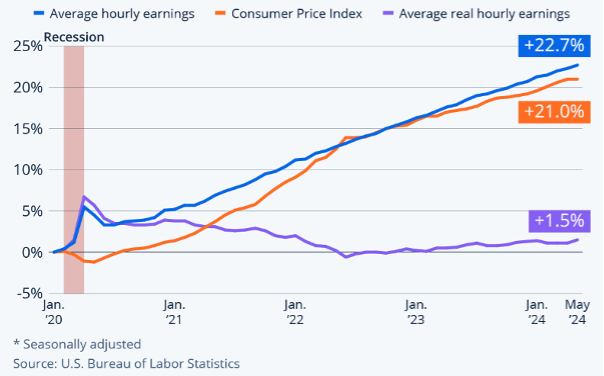
Statista
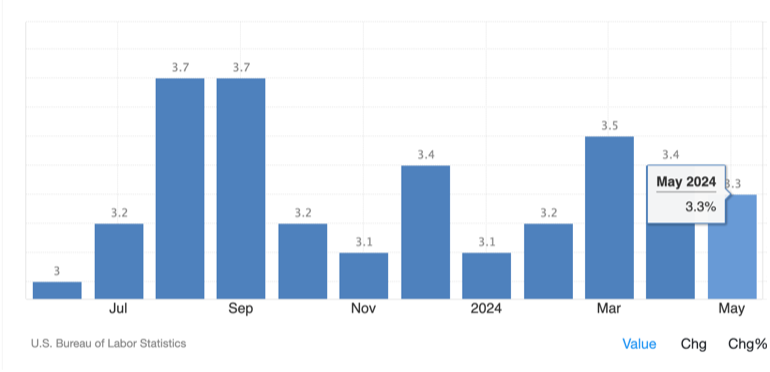
U.S. Rate of Inflation
U.S. Unemployment Rate
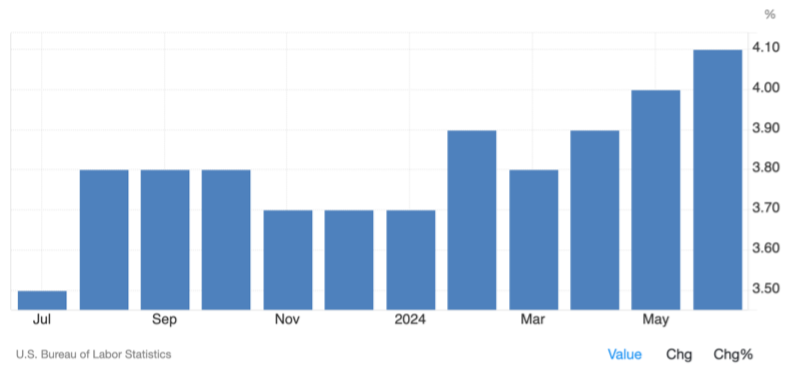
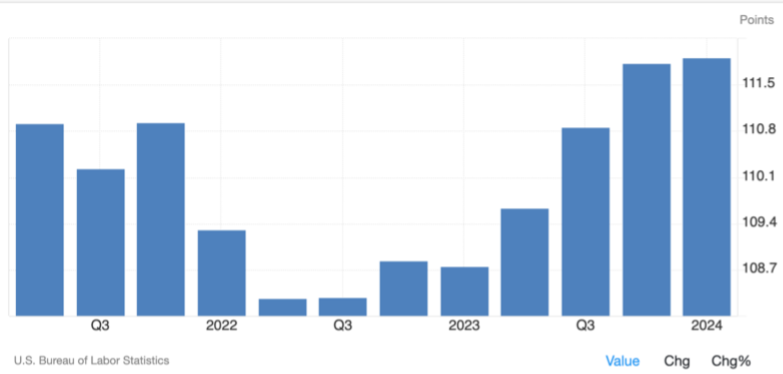
Labor productivity is a function of output versus how many workers enter and exit the workforce. As of June, the Labor Participation Rate ticked up slightly to 62.6%, while the unemployment rate increased to 4.1%.
While unemployment climbs, productivity increases with it (as there is similar output and fewer workers). So it appears that a new narrative is emerging, where employment is softening and employers are adjusting to their new normal–which includes technologies such as AI that will prop up productivity. To date, AI has disproportionately benefited big tech.
U.S. Labor Productivity
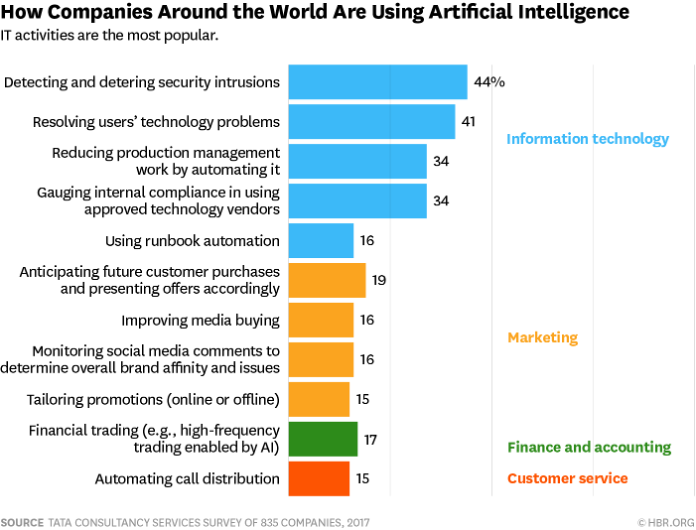
In the coming months and years, the impacts of AI are more likely to spread to other applications such as automating call centers, and financial trading. Leveraging AI also accounts for much of the movement in big tech stocks this year.
Asset Class Conundrum
A rising stock market has created wealth and curiosity–can the market keep running? Are there viable alternatives? While we do not dispense investment advice, we too are curious. Ten years ago, the ten largest companies comprised 14% of the S&P 500’s value. Today, the Magnificent Seven (Apple, Amazon, Alphabet, Meta, Microsoft, Nvidia and Tesla) make up one third.
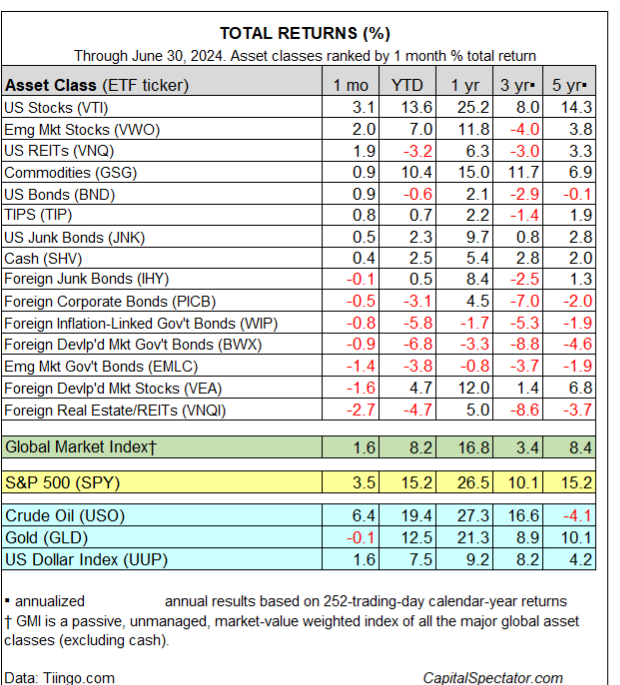
Large cap-stocks have outperformed small caps, during a time when high borrowing costs arrest investment. Huge swings in Nvidia and Tesla suggest more volatility ahead. Yet the market’s run is particularly impressive given high bond yields that compete for dollars. With a depressed commercial real estate market, investors don’t seem to have anywhere to go. While U.S. stocks are up 14% YTD, Real Estate Investment Trusts (REITS) are at -3%, as cap rates have inched higher.
Total new home starts fell 6% in May, and inventories remain low in most markets. Apartment building values are down 13% since before the pandemic. Builders are not highly incented to bring new inventory to the market, even though rents are higher.
Kiplinger Letter
Anti-Trust and Regulation
It’s too early to tell what impact the “Chevron Deference” Supreme Court decision will have on U.S. commerce. But it is widely believed that last month’s decision will dramatically reduce regulation. The sweeping decision reduced the power by non-elected regulators to set policy that critics found punitive. The court’s liberal judges wrote a scathing dissenting opinion that suggested the majority had gone too far in restricting federal power.
SCOTUS found that courts must use “independent judgment” when determining the meaning of federal statutes. Judges cannot simply defer to agency regulators if a statute is unclear. The likely impact will be a litany of lawsuits challenging existing regulations, which could become chaotic as one judge overrules the next. But the decision may force lawmakers to be more specific on laws they create.
After 20 years of little to no anti-trust action, the U.S. government now seems resolute to block any major transaction that concentrates market power. Most industries have already rolled up.
Yet U.S. enforcement pales in comparison to its European counterparts, who are imposing historic restrictions on U.S. tech companies. In a reveal of the state of play, Meta has run afoul of regulators and has been accused of breaking Europe’s digital competition rules. Meta is now facing scrutiny for creating an ad-free subscription to comply with European rules. Meanwhile, Microsoft is in hot water with the EU for bundling Teams with Office.
The Meta controversy created a fury of online activity, with critics pointing out that regulation is stifling innovation in Europe. Of the largest 500 companies in the world, 278 are based in the U.S. and China. Almost all European countries in the top 500 are in auto manufacturing, banking, and pharma. In comparison to the U.S., Europe does not have a tech sector, and U.S. companies are outpacing their European counterparts.
By Marc Emmer for Inc: Online Marketers Test Everything. You Should Too

Maximize impact with A/B testing. Drive innovation and enhance user experiences across industries with data-driven decision making.
Webinar: The Stay or Go Survey
The Strategy Experts

Marc Emmer is President and Chief Strategist & Facilitator at Optimize Inc.
He is an author, speaker and consultant recognized as a thought leader throughout North America as an expert in strategic planning.


