

And just like that, the script has been flipped. The government is moving from cooling the economy to reviving it. We are beyond a discussion on whether the Fed will lower rates in September, and onto the likelihood that it passes along a 50-basis-point reduction. Some already think the Fed is late, given that 11 of the 30 largest central banks including China and Canada have cut rates.
The capital markets moved down sharply based on the July jobs report. Further, the spread between the 10-year Treasury and mortgage rates is another indicator of weakening, as borrowers tend to lock in shorter-term debt during economic slowdown. Mortgage rates are dropping like a rock.
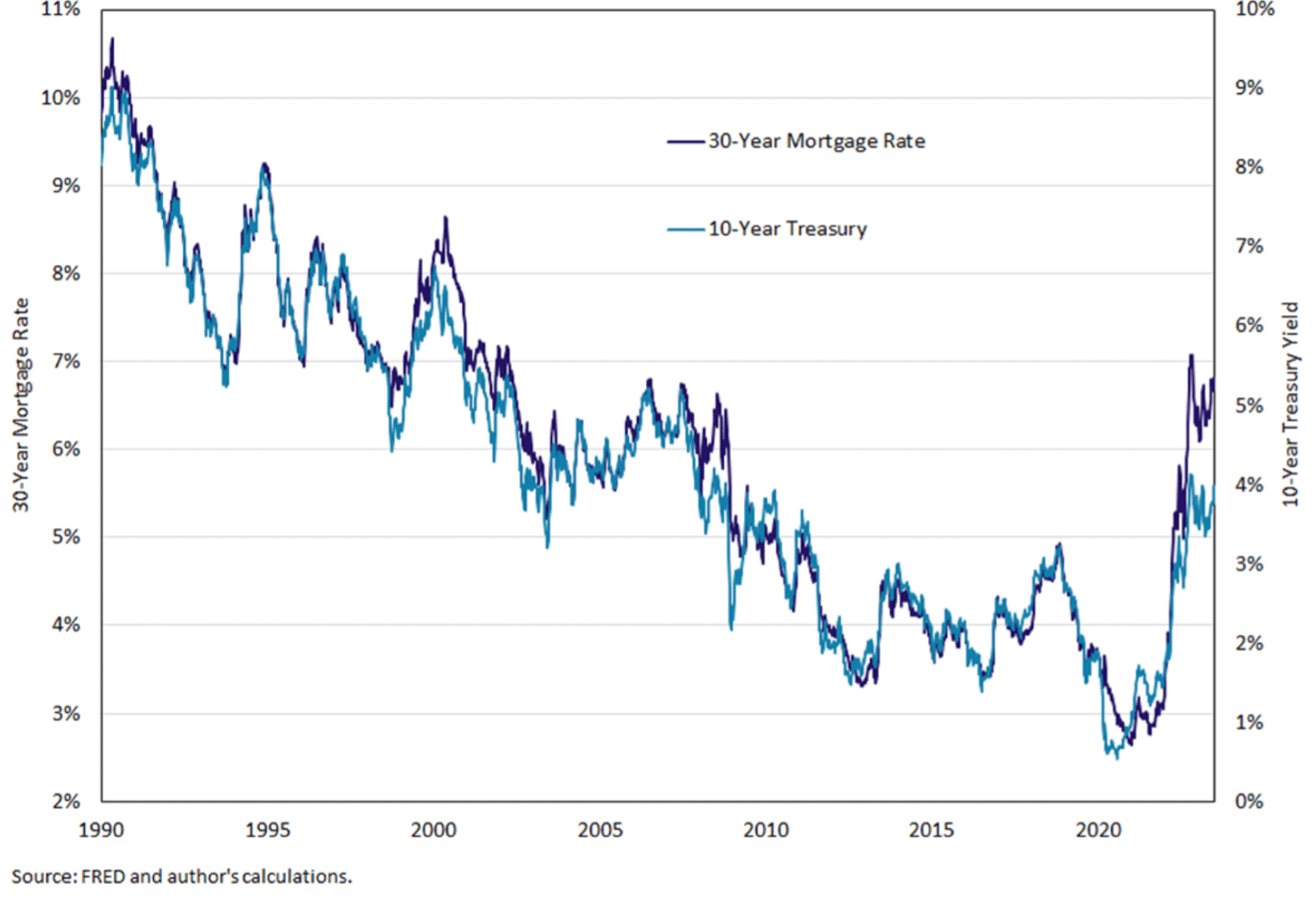
In these pages, we didn’t buy the recession fears over the last couple of years. Even now, we think it’s overstated. If the economy grows by 1.5% or so in 2025, that will mark a slowdown and not a recession. However, we know stock market valuations are deeply rooted in Animal Spirits (overreactions based on our emotions). The market meltdown is an indication that the street has underestimated softness in the labor market.
Why the jobs report is deeply flawed
With all that said, the troubling thing about the jobs report is a pattern where government numbers are consistently overstated. These data points are flawed, as initial reports are only estimates based on small samples. April’s job report came out at +165,000 and was revised down to 108,000, and in June from +272,000 to 218,000. By the time the revisions come out, the market has moved on to other news. This suggests the Fed is even further behind.
Unemployment is an imperfect number
The Bureau of Labor Statistics (BLS) reports on the number of people who work part-time for economic reasons—also known as involuntary part-time workers—in its monthly Employment Situation release.
People who work part-time for economic reasons are those who would prefer full-time employment but are working part-time due to circumstances such as reduced hours, inability to find full-time work, slack work, unfavorable business conditions, and seasonal declines in demand.
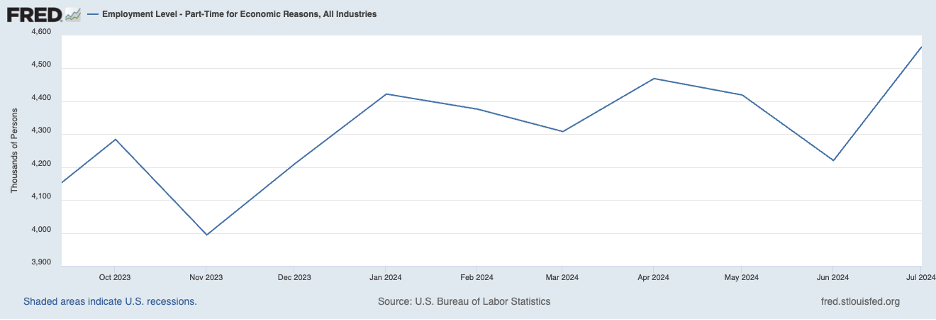
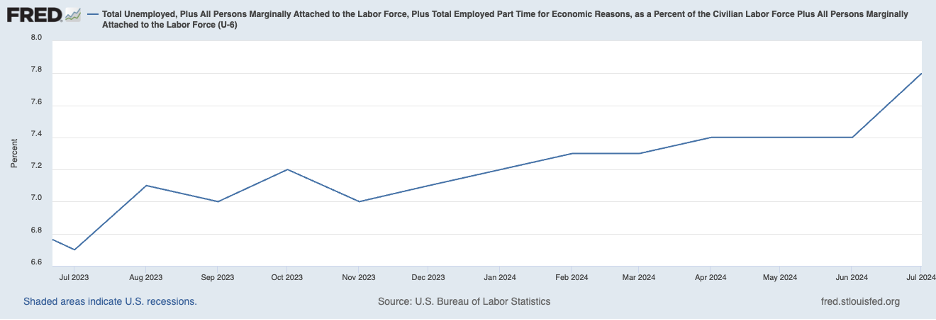
U-6 spiked in June because of the number of part-time workers—many of whom couldn’t find a job—suggesting that many Americans are struggling to get by (Source: MBS Highway). While we prefer the word “slowdown” to describe our economic condition, we have been in one for a few months.
U.S. dollar & U.S debt
Another variable looming large is the strong U.S. dollar, which impacts American exports (especially manufacturers). An interest rate cut and the presidential election could produce large swings in currency valuations. Donald Trump and J.D. Vance have called for a devaluing of the dollar. Yet every .3% cut in interest rates reduces the federal deficit by $100 million, so a path to lower rates also suggests a stronger dollar.
Is there an antitrust reset?
Back in 2015 when Albertsons bought Safeway, it won government approval by requiring that both chains sell off stores in markets where they would lock out competition. This has been a common tactic, especially in cases where regulators sense a threat of higher prices.
But looking back, the divestiture of 168 stores led to closures, loss of real estate investment, and job loss. Some neighborhoods were stripped of their only grocery store.
In the ultimate industry consolidation last year, Kroger—operating 2,800 stores—agreed to buy Albertsons’ 2,200 stores. Traditional grocers are fending off Costco, Walmart and ecommerce. It’s hard to imagine the government allowing the deal without conditions, but the Federal Trade Commission will have to deploy a different playbook than requiring buyers to sell off assets. Companies of all sizes need to think about how such dynamics could reset the state of play in their industries.
By Marc Emmer for Vistage: How marketing spend has been transformed forever

Our annual review of marketing trends and spending benchmarks reveals a stunning subplot; the confluence of technologies including AI has already reshaped the field of modern marketing.
Video – Strategy Brief: How does your strategy change as you grow?
The Strategy Experts

Marc Emmer is President and Chief Strategist & Facilitator at Optimize Inc.
He is an author, speaker and consultant recognized as a thought leader throughout North America as an expert in strategic planning.


