

Let’s face it, economists are often wrong. But why has their calculus about inflation been so fundamentally flawed? Why is the current form of inflation so persistent?
As we offered repeatedly on this page, inflation cannot be arrested with continued job growth (+175,000 in March). April’s wage inflation was 5%. And Americans who are earning more want to spend, damn it.
The supply chain shocks that prompted sharply higher prices are behind us, but the Russia-Ukraine war rages on. More importantly, the Fed had never flushed the economy with so much cash, or curbed credit to this degree.
Fed tightening
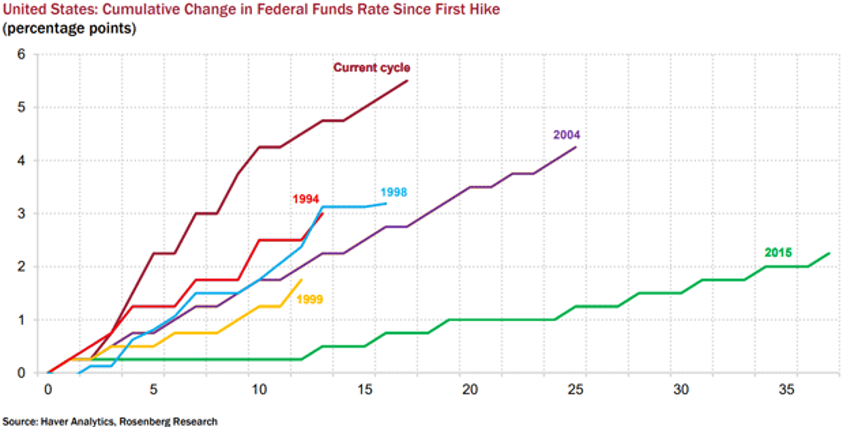
As John Mauldin points out on Thoughts from the Frontline, the Fed squashing demand by making credit more expensive is a time-tested, proven tactic. And while tightening typically leads to a recession, that’s not always the case. Since 1950, the Fed has raised rates 14 times, 11 times resulting in a recession—on average, 26 months later.
But clearly the persistence of inflation has caught the Fed by surprise, and rates are stuck in quicksand. In fact, 30-year mortgage rates spiked again in late April. A higher concentration of infusion has translated into more time to recover from it.
Inflation is a sticky wicket
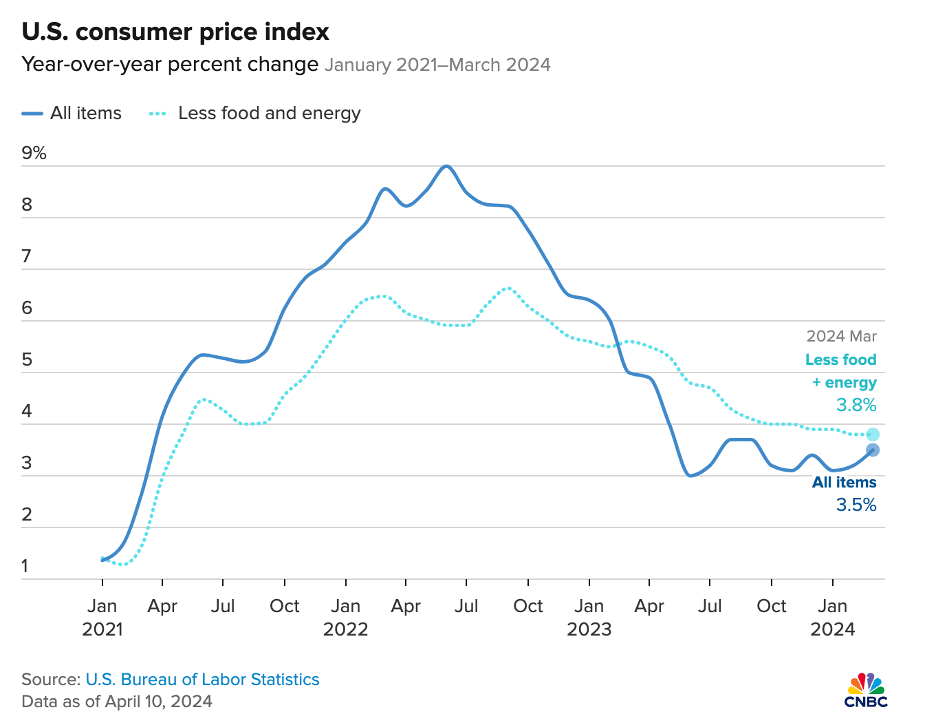
While items such as food and energy are usually the culprits for inflation, they are not the categories with the highest price increases of late. Vehicle insurance is up 22%, elder care +14%, and veterinary services +9.6% in March. But unlike some services which are discretionary, it’s home prices that really move the needle on inflation. The Producer Price Index—the measure of producer and wholesale costs—inched lower in March, but remains high.
Generative AI 2.0
In a preview of an upcoming post, OpenAI’s Sam Altman recently said ChatGPT is “the dumbest it will ever be.” OpenAI is due to release version 5 within 60 days, and Altman believes it will offer a significant upgrade from ChatGPT-4.
Users we’ve spoken to are mildly satisfied with Microsoft’s Copilot, but it appears most applicable to high-rent knowledge workers. Given its price tag, some companies have resisted applying it more broadly.
Autonomous subscriptions
Tesla’s Elon Musk has had a brutal couple of months, facing a Cybertruck recall, backlash on his compensation, poor output, and lower EV demand leading to price cuts.
In the last 30 days we’ve been able to test Tesla’s full self-driving technology for the first time. In a novel move, the upgrade was pushed as a free trial in the form of a software update. Users report they are prompted to pay an additional $99 per month after.
The price is hard to swallow, but the technology is intriguing. While clunky and slow in residential neighborhoods, full self-driving appears competent and safe. As the most deployed machine learning/AI technology in the market today, it’s easy to see how within 3-4 years, the technology improves exponentially. The perception that machines can’t outperform humans behind the wheel is self-limiting. Musk is sending signals that he is betting the farm on autonomous, shifting to model driverless taxis and humanoid robots.
Video: The Trouble With SWOT
Podcast Recommendation: Are Our Tools Becoming Part of Us?
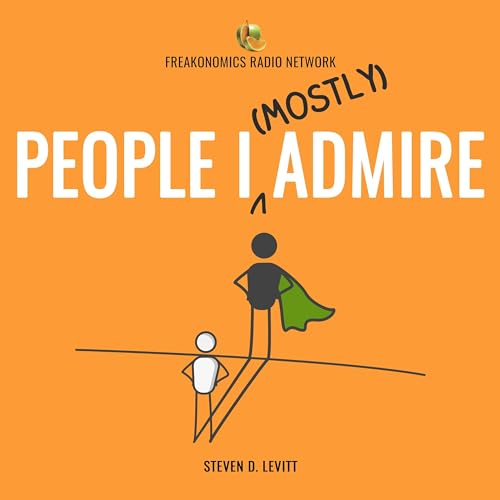
Google researcher Blaise Agüera y Arcas spends his work days developing artificial intelligence models and his free time conducting surveys for fun. He tells Steve how he designed an algorithm for the U.S. Navy at 14, how he discovered the truth about printing-press pioneer Johannes Gutenberg, and when A.I. first blew his mind.
The Strategy Experts

Marc Emmer is President and Chief Strategist & Facilitator at Optimize Inc.
He is an author, speaker and consultant recognized as a thought leader throughout North America as an expert in strategic planning.


