

10 Moves for Smarter, Stronger Second-Half Growth
Headwinds and Hazards: What’s Really Ahead
If 2025 had a tagline, it might be “Perpetual Uncertainty, Now with Less Labor and More AI.”
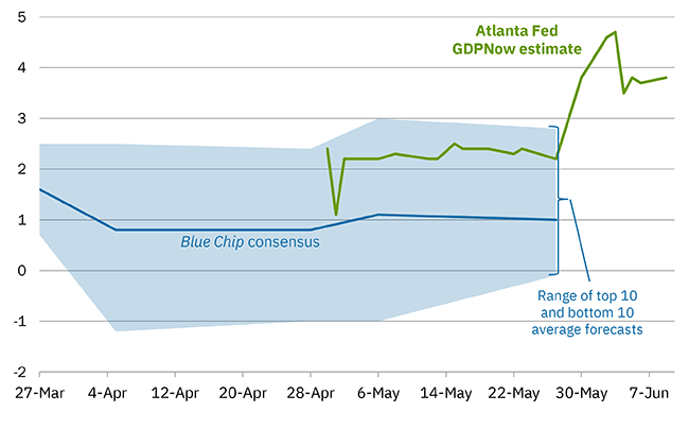
As we cross the mid-year point, early GDP projections suggest surprising growth (3.8% in Q2)—enough so the Fed might not cut interest rates soon. And while a recession seems unlikely for now, that’s little comfort in a socioeconomic climate teetering between resilience and unrest.
Atlanta Fed GDP Q2 Estimate
The challenges are layered. Civil tensions continue to simmer. Rising oil prices, driven by conflict in the Middle East and potential disruption in the Suez Canal, threaten to destabilize energy costs again.
Low-cost labor pools will shrink as a result of immigration enforcement, putting pressure on wages. According to Bloomberg Businessweek, some 800,000 workers from Cuba, Haiti, Nicaragua and Venezuela are under heavy scrutiny.
Foreign Born Participation Rate
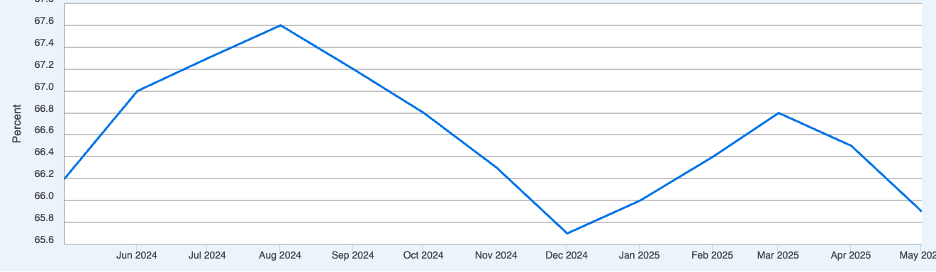
Source: Federal Reserve Bank of St. Louis
Even manufacturing, once a bright spot, remains in the doldrums. The Philadelphia Fed’s General Activity Index dropped again this month. This is occurring as manufacturing and other sectors such as construction are at risk for significant labor cost increases.
In May, U.S. wages held steady with a 4.5% annual increase—continuing to outpace overall economic growth. The trend is uncomfortably reminiscent of the post-COVID labor cost surge that caught many employers off guard.
May YOY Wage Increase By Industry
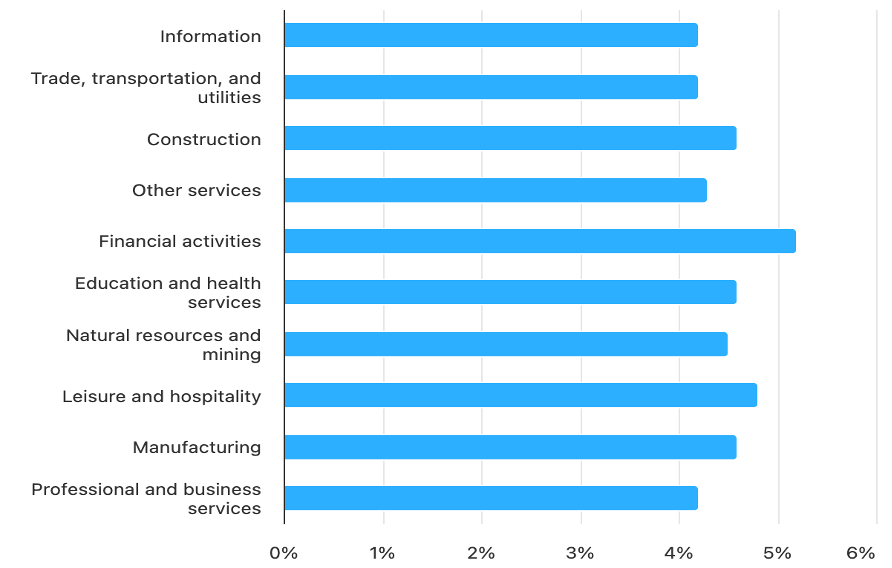
Source: ADP
But this isn’t a time to throw your hands up. It’s time to recalibrate.
In a Bloomberg survey of economists, the probability of a recession within the next year is still hovering near 50%. So while we’re not in a crisis, this is no time for complacency. And that means taking action without overcommitting to a single narrative.
Playbook for the Second Half
- Double down on core, but don’t fall asleep at the wheel
Our recent study on marketing (see below) revealed a fascinating insight. In times of uncertainty, poorer performing companies reduce marketing spend. They focus on segments and customers they know best, which produces a more predictable ROI.
While this is sensible, it’s also limiting. There will be sharks in the water, ready to capitalize on others’ conservatism and seize opportunities.
- Shift focus to certainty
As highlighted in our strategy work, chasing too many markets leads to diluted value. Instead, create targeted offerings for niche segments with pricing, communication, and delivery models tailored to each.
Use your experience, signature clients and social proof (white papers, case studies and testimonials) to exude certainty. You know this business, so you can project actual results based on your track record. “No one ever gets fired for hiring IBM.”
- Dynamic and other pricing strategies
Dynamic pricing is here to stay. Companies using real-time data to adjust prices are better able to manage labor, inventory and demand. It’s bad business to maintain variable inputs (labor costs) and fixed outputs (prices). If you’re still relying on annual price adjustments, you’re leaving margin on the table.
This isn’t a time to accept the status quo. Just because pricing in your industry has stuck to a pattern doesn’t mean you need to follow competitors. The adoption of dynamic pricing is exploding, and creating better alignment of your costs and pricing is a useful tactic.
- Build a flexible labor model
Low-cost labor is getting harder to come by. Consider investing in automation where possible (workflow tools can dramatically cut admin overhead), while developing a core of skilled workers you can incentivize and retain. Flexibility is the name of the game: contract where needed, retain where it matters most.
- Audit your energy strategy
AI infrastructure is consuming more electricity than expected, and global energy demand continues to rise. Manufacturing businesses should reassess their exposure to volatile pricing, especially during peak hours. Consider energy efficiency audits, off-peak production, or long-term power purchase agreements to stabilize costs.
- Demand adoption of AI
AI continues to drive investor buzz and stock volatility. But with adoption still relatively low (only 29% of businesses have implemented GenAI tools), leaders must balance opportunity with realism. Instead of betting the farm, test narrowly and learn fast. Adopt where ROI is proven. But the time for waiting is over; if you’re not adopting AI every day, you will fall further behind.
- Scenario plan for political turbulence
Frustration with the administration and rising social unrest makes it essential to run scenario planning exercises. Could new tariffs disrupt your supply chain? What if tax policy shifts dramatically in 2026?
Most importantly, be aware of the strain on your employees’ mental health. People are picking sides, and they are upset. This creates a lot of tension in a workplace.
- Shift spending to customer retention
With personal spending slowing and acquisition costs rising, 2025 is the time to shift marketing dollars toward retention. Loyalty programs, subscription models, and white-glove service can be more impactful than a new ad campaign.
- Map your talent pipeline
As boomers continue to exit and Gen Z enters, succession planning is no longer optional. Identify high-potential talent and build a roadmap to develop and retain them. Invest in leadership readiness, not just skills training.
- Game your tax situation
The 2017 tax cuts are set to expire after 2025. The Big Beautiful Bill will probably pass in some form, with many revisions and the requisite pork provisions. Business owners will have a unique opportunity to lock in lower tax obligations.
Business owners should begin tax optimization strategies now: accelerating income, delaying deductions, or restructuring entities to mitigate exposure. You may not get another window like this.
By Marc Emmer for Vistage: Marketing in 2025: AI, uncertainty and the hidden cost of standing still

In our annual analysis of marketing trends, we found that companies have pulled back on marketing investment as a result of economic uncertainty. To see a list of benchmarks and Marc Emmer’s recap on patterns in the evolving world of marketing, click here.
Podcast Recommendation: Middle Market Mergers & Acquisitions

Get the insiders’ take on mergers and acquisitions. M&A investment bankers Gina Cocking and Jeff Guylay of Colonnade Advisors discuss the technical aspects of and tactics used in middle market deals.
The Strategy Experts

Marc Emmer is President and Chief Strategist & Facilitator at Optimize Inc.
He is an author, speaker and consultant recognized as a thought leader throughout North America as an expert in strategic planning.


