
There’s a big world out there beyond Ukraine and Gaza.
In the past two weeks alone, the global trade landscape has shifted dramatically. Canada has rolled back many of its retaliatory tariffs on U.S. goods under USMCA, seeking calmer waters in an increasingly stormy relationship. At the same time, the U.S. has leveled up pressure on India—raising tariffs to a staggering 50%. This represents yet another reset of the world order, and the impacts to the U.S. economy will be widespread.
While tariffs’ effects on inflation have felt muted, the timing of additional taxes on U.S. imports puts further pressure on the Federal Reserve. In Powell’s remarks last week, he said nothing to rebuke assumptions of the market, which has baked in a half-point cut to the Federal Funds Rate. All of this is happening against a backdrop where the capital markets are already running.
So get your popcorn ready—the second half of the year in international affairs should be a wild ride.
China: Trouble In Paradise
China’s economy is cooling. China’s National Bureau of Statistics (strangely, an agency less controversial than the BLS) reported a 5% growth rate in the first half. But China’s economy is certain to slow as a result of U.S. tariffs once they go into effect for good.
Much of China’s trade with the U.S. is understated, as it is routed through other countries. Many logistics firms shipping Chinese products set up warehouses throughout Asia (including in Vietnam and Malaysia), where goods could be repackaged and mislabeled before heading to the U.S. This comprises a significant proportion of some goods like furniture and textiles. So as enforcement ratchets up, another shuffling of the deck is underway.
Meanwhile, Chinese retail sales have slumped to +3.7%, which proves problematic for a government trying to right the ship through consumerism to offset sliding sales of commercial goods.
India: A Relationship Gone Sour
The U.S.–India trade relationship gained momentum in the Clinton era, with early 2000s economic liberalization and IT offshoring laying the foundation. The Bush Administration deepened strategic and economic cooperation via civilian nuclear agreements and defense ties.
These early building blocks paved the way for the Modi-era “Strategic Partnership,” aimed at doubling trade to $500 billion by 2030. Now that relationship is in tatters and feels more like a messy divorce, complete with reciprocal tariffs. Now that the Trump Administration slapped India with a 25% reciprocal tariff plus a further 25% penalty tied to India’s purchase of Russian oil—totaling a 50% duty on selected exports—India responded by cutting its cotton import duty (from 11%) temporarily until September 30. The garment sector, a critical B2B and B2C export driver, faces a dire choice: relocating production or absorbing the margin hit.
Canada & Mexico: Trade Truce?
In a conciliatory gesture, Canada has reversed many of its retaliatory tariffs on U.S. goods, effective September 1. Key exclusions remain (including steel, aluminum, and autos) where tariffs persist. The hope: reignite stalled USMCA review talks and dial down tensions.
Though recent headlines focused on Canada, background data shows Mexico has similarly been insulated by the USMCA exemptions, keeping 84% of its trade tariff-free. If President Trump pivots toward aggressive cartel-focused rhetoric or action in Mexico, the risk of derailment in trade talks could rise—harming both B2B and B2C inputs, especially in cross-border manufacturing and agri-trade, which is more regulated. This puts industries such as agriculture, food processing, automotive, and energy at risk.
Cost of Energy
Tariff dynamics are reshaping energy costs. Higher duties on aluminum, steel, copper, auto parts, and semiconductors are straining raw material availability and raising costs for U.S. industries—even amid Canada’s partial retreat. So energy sectors remain volatile (isn’t that always the case?).
Long story short, our economy and the supply chains within it remain remarkably resilient, but higher costs for both businesses and consumers feel inevitable. And that’s not a short-term condition; it will be our new normal.
Video – Marc’s Minute: AI-Enabled
By Marc Emmer for Inc: Why Businesses Are Leaning Into Partnerships to Scale

Companies aren’t just using affiliates for marketing—they’re turning to third parties for R&D, delivery, logistics, financing, and even customer experience. According to a McKinsey study, companies that lean into partnerships and ecosystems grow revenue 2.1x faster than those that don’t. Affiliation offers flexibility, scalability, and, perhaps most importantly, speed. When markets shift as quickly as AI prompts, few businesses can afford to innovate in isolation.
The Demise of California Is Greatly Exaggerated
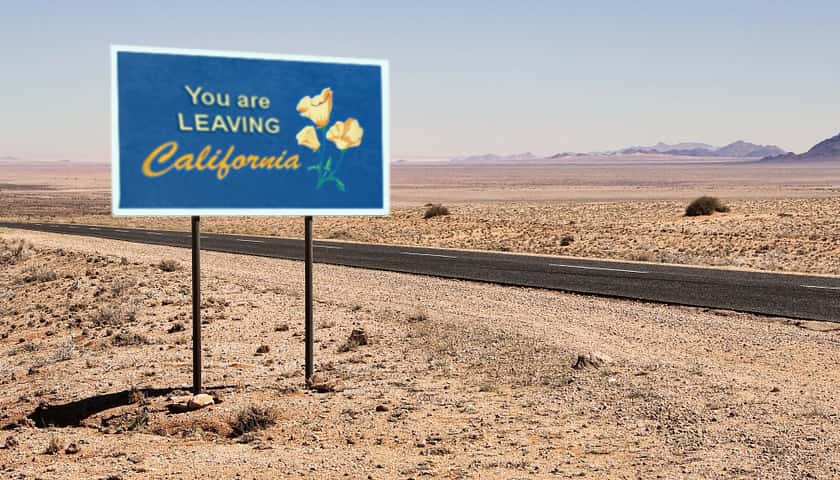
While headlines paint a picture of mass exodus and economic decline, the facts tell a different story. After a brief dip during the pandemic, California’s population is stabilizing (and in some regions growing again). More importantly, the state’s economy is booming: California recently surpassed Germany and now ranks as the fourth-largest economy in the world.
Despite its challenges, San Francisco has re-emerged as the epicenter of the AI revolution. The Bay Area is where leading labs, startups and investors are clustered, making it the beating heart of AI innovation globally. California will be pivotal to maintaining American leadership in AI over China.
The economy remains resilient across multiple sectors—technology, entertainment, agriculture, and trade—powering job growth and driving high wages. Median household income in California consistently ranks among the nation’s highest, reflecting both the demand for skilled labor and the strength of its industries. Far from dying, California is reinventing itself yet again as the place where the future is being built.
And, despite the wacky political in-fighting, the state is cleaning up its act. Much of the homelessness and lawlessness in cities such as Los Angeles and San Francisco has been reversed in recent months reflecting shifting priorities. For example, Los Angeles has seen a dramatic decline of smash-and-grab robberies.
Don’t give up on California. It’s been declared dead more times than disco—but as the dust settles on the new world order, California is one of the winners.
Don’t Miss Out: Free Strategy Playbook Masterclass
Have you joined our Strategy Masterclass? In this 10-part series, you will learn how to master the art of strategy.
Click below to subscribe for free.
The Strategy Experts

Marc Emmer is President and Chief Strategist & Facilitator at Optimize Inc. He is an author, speaker and consultant recognized as a thought leader throughout North America as an expert in strategic planning.


