

The initial reactions to the AI revolution were fear and wonder.
Would millions of workers become obsolete? Could machines eventually control humanity, or destroy it? For the moment, these fears appear to be unfounded.
The conversation has shifted to the practical. Executives are asking, can AI summarize by sales calls in CRM or provide a customer estimate? They are realizing for now that it is not that AI will outsmart us, but that it will make us smarter.
The tide is shifting. If AI competition were the Kentucky Derby, the call would have been that OpenAI stormed out of the gate to take an early lead. Now, Claude looks like Secretariat. And down the stretch they come.
Over the last year, Anthropic’s Claude came out of nowhere to take a 40% share of enterprise users, well ahead of OpenAI’s 27%. Claude’s agentic capabilities, which are both highly accessible and easy to use, have propelled the platform past its competitors.
Different benchmarks produce different winners, and no model dominates every category. But Claude has performed especially well in several recent coding-agent evaluations, while OpenAI, Google, and a growing field of challengers continue to trade positions. Just last week Chinese company, Kimi’s K3, drew attention because it reportedly matched or exceeded US models on several benchmarks at roughly one third the cost. It is also not hard to spend all your tokens using agents in Claude, so we advocate having licenses for more than one AI tool at a time (unless you want to reach for professional/max licenses).
An agent is designed to pursue an outcome rather than simply answer a question. It can collect information, analyze documents, use software tools, execute a series of steps and deliver a finished product.
The barriers to using AI have fallen dramatically. Organizations no longer need a large data-science department to begin. A knowledgeable businessperson, paired with the right technical environment and appropriate controls, can build a useful internal application in days rather than months.
Could Vibe Coding Replace Traditional Software Development?

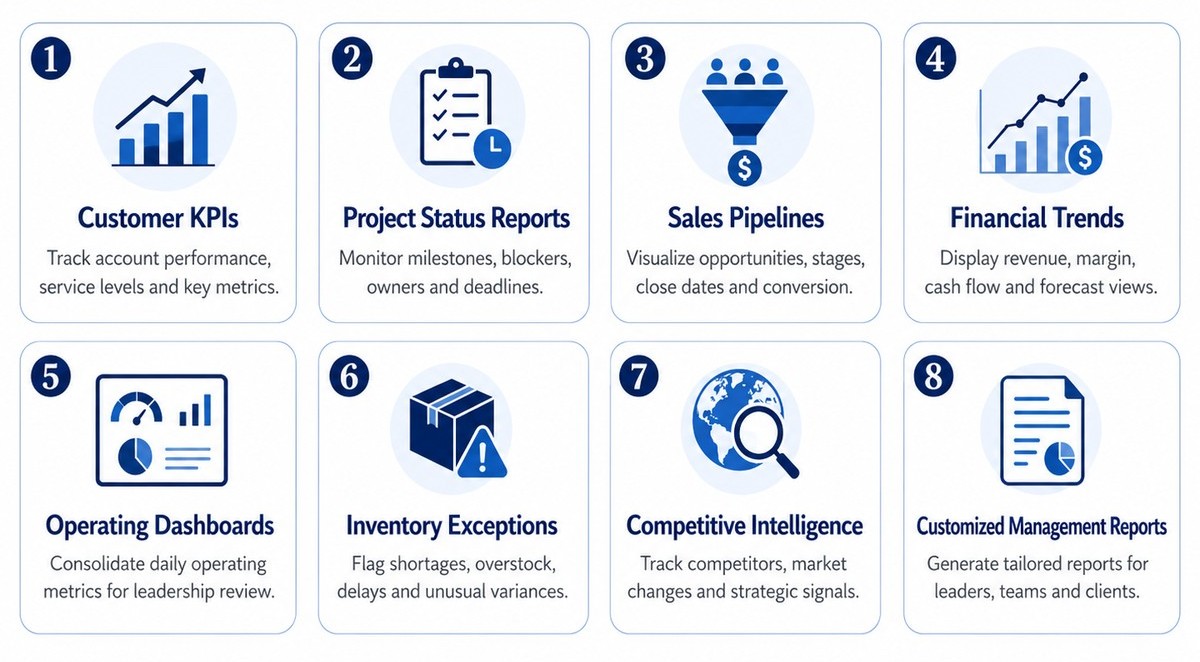
For small and medium sized companies, the next frontier is vibe coding. In a vibe-coding environment, a user describes what an application should do in plain language. The AI generates the interface, writes much of the underlying code, connects data and repeatedly modifies the product based on feedback.
The user is not necessarily writing code line by line. The user is directing the outcome. Need a technical spec? No, how about a mockup? Nah, all you need is a Claude desktop application and someone who knows how to use it.
Simple internal applications, prototypes, dashboards and workflow tools will increasingly be built by operators rather than professional developers. Experienced engineers will concentrate on architecture, security, integration, testing and enterprise-scale systems.
Solutions Anyone Could Create with Vibe Coding
But there is a catch.
AI-generated applications can produce bad logic, expose confidential information, create security vulnerabilities and generate systems nobody knows how to maintain. Think of it this way, your ERP system is structured, and stodgy. It may not give you data points or reports you need; it is highly reliable and accurate. Vibe code can fill the gaps in ways that are low cost and low risk.
Inflation is Cooling. The Cost of Living is Not.

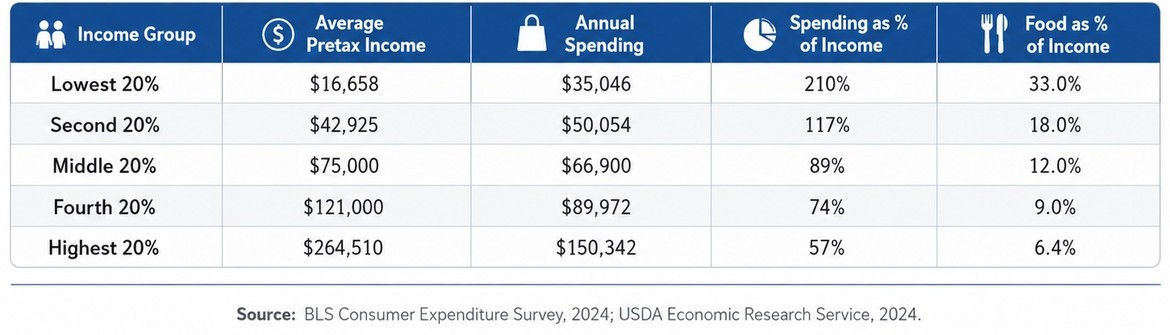
The inflation debate has become overly focused on whether the monthly Consumer Price Index has moved up or down. This is a poor reflection of what is happening in many U.S. households. Reports of dis-inflation don’t make you feel better if you can’t afford groceries.
In a country in which income inequality is a mounting problem, an elongated bout of stagflation only creates more separation between the haves, and have-nots.
Lower-income families spend a larger share of their income on necessities. They have less ability to substitute products, postpone purchases or absorb unexpected expenses. They also own fewer financial and real assets that may appreciate when prices rise.
Spending by Income
The Fed Does Not Set Mortgage Rates

Housing is where these forces collide.
The 21st Century ROAD to Housing Act, signed into law, was designed to reduce red tape, and make federal subsidies more available at a local level. It will reduce the cost and guardrails for pre-fab homes.
Yet the ability for buyers to afford homes of any type is severely constrained by high interest rates. Hopes for lower rates this year have been dashed by stubbornly high energy costs.
The narrative that the Fed sets interest rates is vastly misunderstood. The Fed directly controls a very short-term policy rate. Thirty-year mortgage rates are more closely connected to longer-term treasury yields, inflation expectations, economic growth, investor demand and the additional risk premium required by mortgage investors. If banks believe that risk is high, they adjust their “spreads” to take more margin.
Banking Mortgage Spreads
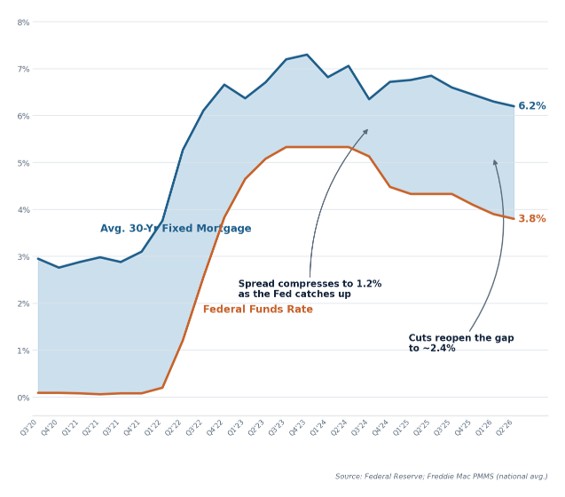
Millions of homeowners secured mortgages at rates below 4%. They have little economic incentive to sell their homes and replace those loans with mortgages above 6%. That suppresses inventory, limits mobility and supports prices.
First-time buyers face the worst of both worlds: elevated prices and expensive financing. We are short more than 5 million units in the U.S. and housing affordability is a crisis that has only just begun.
M&A Trends for 2026 and Beyond

It is the best of times and worst of times for mergers and acquisitions.
After a decade of roll-ups, Vistage members have grown weary of private equity transactions and are wondering: Is this a good time to be a buyer or a seller?
The Ins and Outs of Selling a Business (Part II)
AI is changing the way businesses compete, and buyers are paying attention. In Part 2 of this conversation, Keith Dee sits down again with Mark Emmer, President of Optimize, Inc., to discuss how AI, strategic planning, and operational discipline can increase business value.
They explore practical ways companies can adopt AI, improve processes, and build the kind of growth strategy buyers are looking for in today’s M&A market.
Whether you’re planning to sell in the near future or simply want to build a stronger business, this episode offers valuable insights on using AI and strategic planning to position your company for long-term success.
The Strategy Experts

Marc Emmer is President of Optimize Inc. He is an author, speaker and consultant recognized as a thought leader throughout North America and as an expert in strategic planning.


