
In case you missed them. From our archives, these are some of our favorite articles.
Productivity for 2026 and Beyond

Since the end of the pandemic, employers have been trying to balance productivity with employee satisfaction. It hasn’t gone well.
While up slightly in 2025, U.S. worker productivity has increased by a meager 1.8% since 2019. Meanwhile, according to Gallup, only 31% of U.S. workers are engaged in their workplace. Nearly 60 million Americans report suffering from some form of mental illness, and 50% say they are stressed at work.
Leveraging Adaptive Pricing for Competitive Advantage
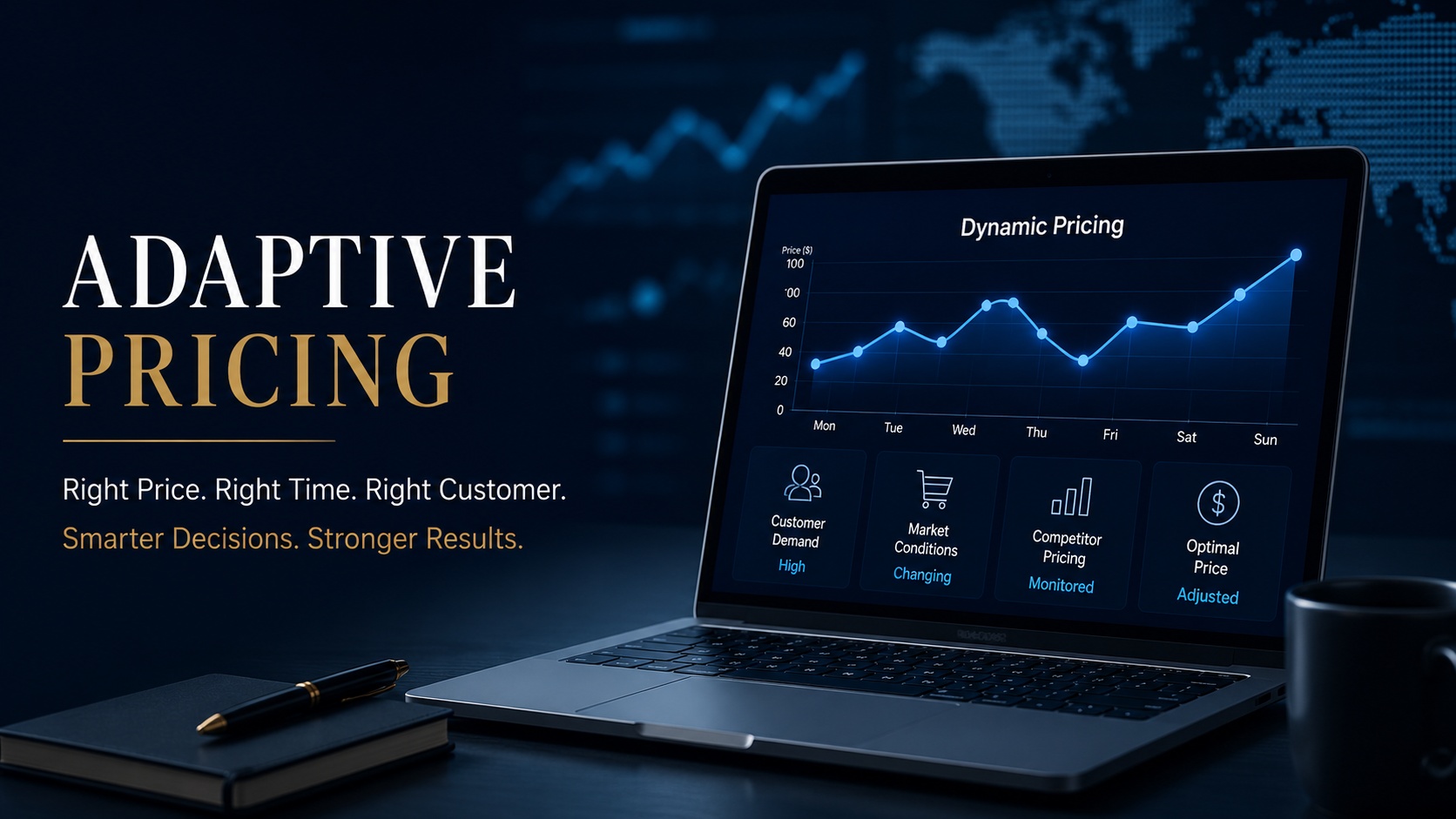
In today’s volatile environment, driven by inflation, supply chain shifts, and changing demand pricing has become a critical leadership lever. In a Vistage Research Post: The CEO’s Playbook for Adaptive Pricing emphasizes moving from static models to real-time, data-driven pricing strategies that protect margins while maintaining customer trust. The core takeaway: in a world of variable costs, fixed pricing is a liability, adaptive pricing is a competitive advantage.
An Oracle Pivot
Some companies read the tea leaves better than others.
Oracle’s reinvention over the last decade is one of the more under-appreciated strategic pivots in big tech. For years, Oracle was synonymous with on-premise databases and ERP systems, mission-critical, sticky, and frankly unexciting. That legacy business still throws off cash, but Oracle understood something many incumbents miss: relevance decays faster than revenue.
Rather than defend the past, Oracle quietly repositioned itself for the next computing cycle. The company invested heavily in cloud infrastructure, not to win a generic hyperscaler arms race, but to specialize. Oracle Cloud Infrastructure (OCI) was built around high-performance workloads, databases, latency-sensitive applications, and eventually, AI training and inference. When generative AI exploded, Oracle was already sitting on the one asset that suddenly mattered more than software features: scalable, reliable compute.
The result is a dramatic shift in Oracle’s growth profile. AI-driven demand has turned OCI into one of the fastest-growing segments of the company. Large language models don’t just need GPUs; they need power, cooling, networking, and contractual certainty at massive scale. Oracle leaned into this reality, signing long-term infrastructure deals and building out multi-gigawatt data center campuses. Its partnership with OpenAI is emblematic of the pivot: Oracle is no longer just selling software licenses it’s selling the industrial backbone of AI.
There’s a clear lesson here for private companies. You don’t need to abandon your core business, but you do need to ask which adjacent capabilities will matter when your customers’ world changes. Oracle didn’t walk away from ERP; it used the cash flows and customer relationships from ERP to fund a pivot into where demand was heading. The company also resisted the temptation to chase everything. Instead, it focused on a narrow, defensible role in a fast-growing ecosystem.
The Rise of Digital Twins
As with most breakthrough technologies, the origin story of digital twins offered a glimpse of what was to come. In the wake of the Apollo 13 disaster, NASA grasped the gravity of innovating quickly with zero margin for error simulating spacecraft systems on Earth to save lives in orbit. Fast forward three decades to a Michigan lab in 2003, and the framework we now recognize as digital twins was born, transforming a life-saving practice into a discipline that would reshape product development forever.
Today, digital twins dramatically accelerate product development and go-to-market strategies. For startups and private companies competing against larger, resource-rich players, this is a game-changer. Why? Because digital twins don’t just create better products; they help companies innovate with speed, precision, and confidence.
Digital Twins in Product Development
At their core, digital twins are detailed, dynamic digital replicas of physical products, systems, or entire factories. By combining CAD drawings, IoT sensors, and real-time data, they allow teams to model, test, and refine designs without the time and cost of physical prototypes.
Consider an aerospace startup using CAD designs of a wing structure. In the past, building a prototype could take months and millions of dollars. With digital twins, the same provider can test dozens of designs virtually in days, iterating until they hit on the right balance of performance and safety. That agility can mean the difference between being first to market or missing the wave altogether. According to MarketsandMarkets, digital twins are projected to grow from $10.1 billion in 2023 to nearly $110 billion by 2028.
Beyond Product Design: Other Applications
While product innovation is the headline, digital twins are being deployed in other surprising ways:
– Smart Manufacturing: Factories are creating digital replicas of entire production lines to test efficiency and predict bottlenecks.
– Healthcare: Hospitals use digital twins of organs or even entire patients to simulate treatments before applying them in real life.
– Energy Management: Utilities use them to optimize power grids and predict outages.
– Urban Planning: Cities like Singapore have created “city twins” to model everything from traffic flows to flood risks.
For private companies, the lesson is clear: don’t limit your thinking. A digital twin can be as small as a machine part or as large as an ecosystem.
For every new product, the clock is ticking. Digital twins compress development cycles dramatically by reducing reliance on physical prototypes and uncovering problems earlier. That’s not just a speed boost; it’s a competitive advantage.
The 2026 Playbook
We must not only accept chaos but find ways to leverage it for competitive advantage and wealth creation. Amid political volatility, inflation shocks, labor dislocation, and technological upheaval, growth and prosperity must be earned.
Having worked with over 230 clients on strategy, our collision with reality has yielded a battle-tested playbook:
Your strategic plan is a working document.
For decades, many organizations relied on static strategies: three- or five-year plans updated annually and largely left untouched. That model is no longer relevant. Competitive threats now emerge overnight, customer demand shifts in real time, and technology compresses decision cycles. Success today requires strategy that is deliberate but flexible.
Contemporary strategy is about relevancy. At its core, strategy is a theory of how you will win. It defines where you will compete, how you will differentiate, and what you believe will change in your market. Just as importantly, it defines what you will not do. In a chaotic marketplace, focus is not optional, it’s essential.
High-level strategy must convert to action.
Management objectives must translate strategy into priorities. Those objectives cascade into execution tools such as OKRs, project plans, and KPIs. When this translation fails, strategy becomes an academic exercise rather than an operating system.
Executing in today’s environment requires two traits that rarely coexist: discipline and agility. Discipline means committing to planning, measurement, and accountability. Agility is willingness to adapt when assumptions prove wrong. High-performing leadership teams understand the difference between persistence and stubbornness.
Competitive analysis must be real-time.
This balance requires continuous evaluation of the competitive environment. Leaders need access to real-time data, not just lagging financial reports. KPIs must reflect both internal performance and external demand indicators: customer behavior, pipeline velocity, pricing pressure, and market momentum.
Management sets the cadence and the tone.
Management practices must reinforce this rhythm. Information sharing should be the default. Leadership teams should meet regularly to reassess assumptions and adapt strategy. Monthly cadence is no longer aggressive, it’s necessary.
Finally, talent matters more than ever. Managers must be comfortable with ambiguity, fluent in technology, and committed to developing people. In an environment defined by chaos, employees don’t want false certainty, they want clarity, trust, and leadership.
The chaos will continue. Our responsibility as leaders is not to eliminate it, but to manage it and, where possible, take advantage of it. The winners of this decade will not be those who predict the future perfectly, but those who build organizations resilient enough to adapt to chaos.
10 Black Swan Events That Could Disrupt Your Business by 2030

The terrorist attacks on September 11 were a shock to our senses. In 2007, few people outside of Wall Street saw the housing crash on the horizon. The Covid-19 pandemic seemed to come from nowhere. These are black swan events: rare, fairly unpredictable, high-impact shocks that turn business models and economies upside down. While you can’t predict them, you can prepare your business to be resilient enough to survive them and even take advantage of them.
Here’s a look at 10 potential black swan events that could impact small and mid-size businesses over the next five years.
Marc’s Minute: How to Use the Value Pyramid to Separate from the Pack
Use our Value Pyramid model as a guide to developing a unique value proposition.
Podcast Recommendation
Diary of a CEO – Scott Galloway: AI Wasn’t Built For You. The Rich Don’t Need You Anymore!

AI CEOs are selling us the dream of ‘freedom’, making billions off the fear of mass job loss! Scott Galloway reveals the truth is more complicated and far more deceptive.
The Strategy Experts

Marc Emmer is President of Optimize Inc. He is an author, speaker and consultant recognized as a thought leader throughout North America and as an expert in strategic planning.


